When my friend Sam started his first blog, he focused only on writing articles and adding keywords. But even after publishing dozens of posts, his website was not ranking well on Google. One day, he discovered that his pages were not properly connected. Some blogs had no links, while others were difficult for visitors and search engines to find. That is when he learned the power of internal and external linking in SEO.
After improving his website structure, his traffic slowly started growing. One of the biggest Internal linking benefits he noticed was better page indexing and longer visitor engagement. Today, smart linking is an important part of modern SEO strategies. In this guide, you will learn how internal and external links work, why they matter, and the best practices to improve your website rankings and user experience.
What Are Internal Links?
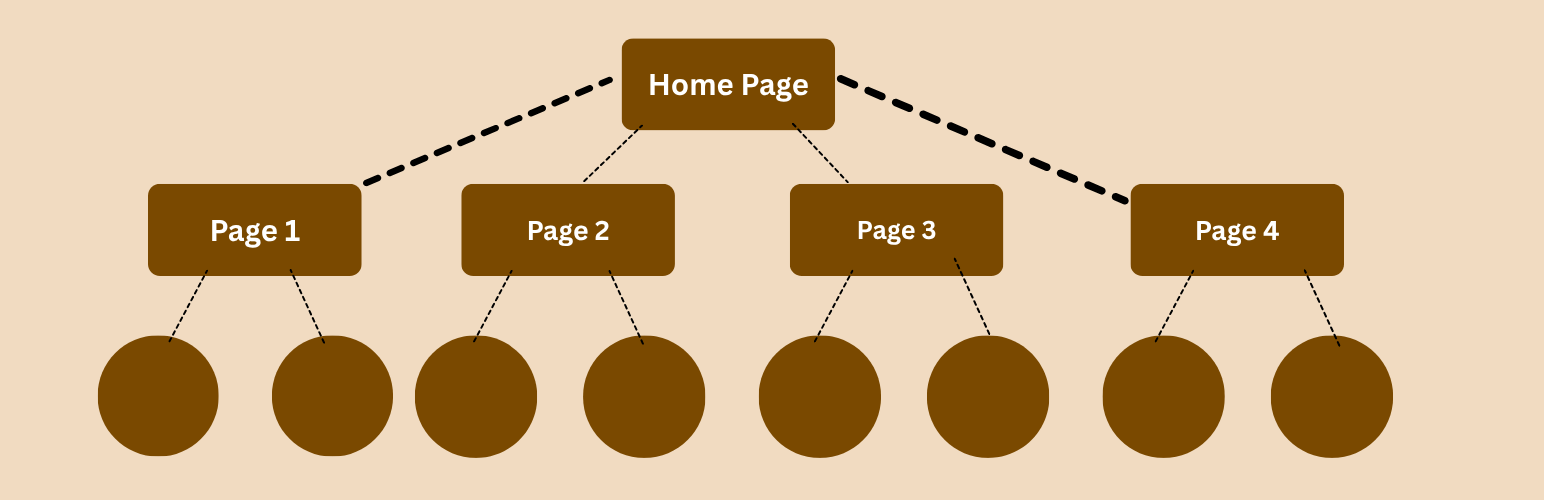
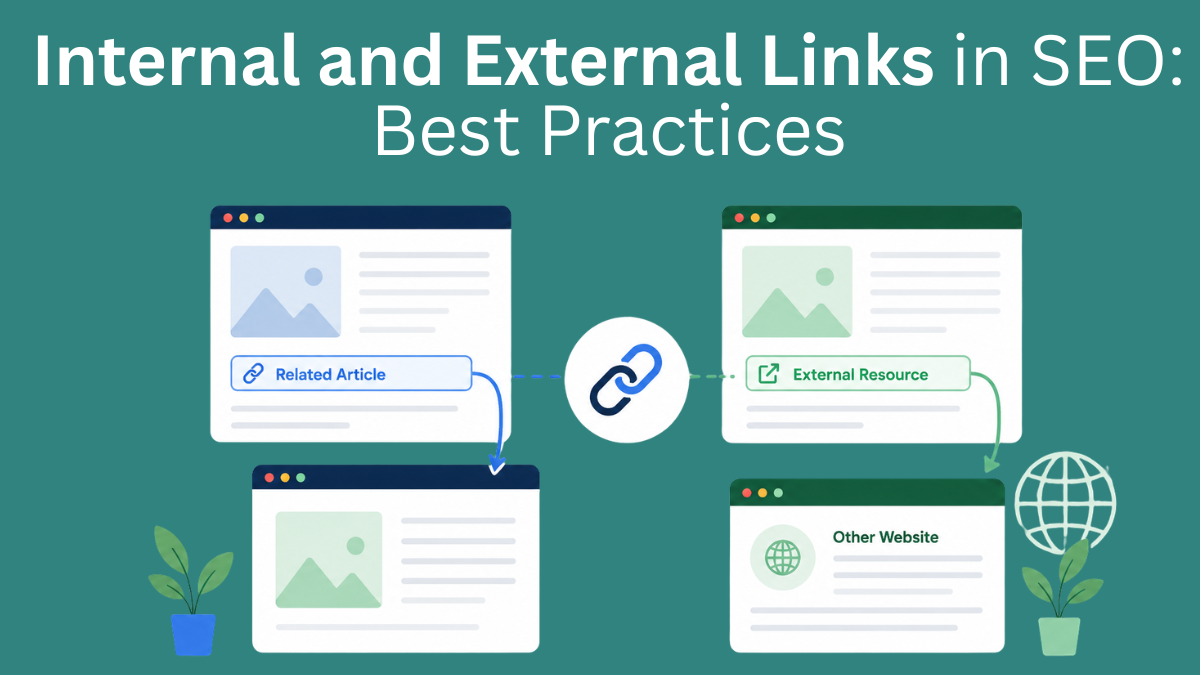
Internal links are links that connect one page of a website to another page on the same website. These links help visitors move easily between different pages and find useful information quickly. Internal links also help search engines understand the structure of your website and discover important pages. For example, if a blog post links to another related article on the same website, that is called an internal link. These links improve navigation, increase user engagement, and support SEO performance. A strong internal linking structure helps search engines crawl and index pages properly. It also spreads page authority across the website, helping important pages rank better in search engine results.
Types of Internal Links
Internal links come in different forms that help improve website structure and navigation.
- Navigational Links: These links appear in menus, headers, sidebars, and footers to help users navigate the website.
- Contextual Links: These links are added naturally inside blog content or webpage text to connect related pages.
- Breadcrumb Links: Breadcrumb links show users the path of a page within the website hierarchy.
- Footer Links: These links are placed in the footer section and usually connect important pages.
- Image Links: Clickable images that direct users to another page are also considered internal links.
- Related Post Links: These links connect similar blog posts or articles to improve user engagement.
What Are External Links?
External links are links that point from your website to another website or from another website to your website. These links help users access additional information from trusted sources. External links are important for SEO because they improve content credibility and help search engines understand the topic of your page. For example, linking to a trusted research article or SEO guide from another website is called an external link. Good external linking practices improve trust, authority, and user experience. Search engines consider quality external links as a positive ranking factor when they come from relevant and trustworthy websites.
Types of External Links
External links can be used in different ways depending on the SEO purpose.
- Dofollow Links: These links pass SEO authority from one website to another.
- Nofollow Links: These links tell search engines not to pass authority to the linked page.
- Sponsored Links: Sponsored links are used for paid advertisements and partnerships.
- UGC Links: UGC stands for User Generated Content and is commonly used in comments and forums.
- Editorial Links: These are natural links added by websites because they find the content valuable.
- Backlinks: Links coming from another website to your website are known as backlinks.
Why Links Matter in SEO?
Search engines use links to crawl websites and understand relationships between pages. Without proper linking, some pages may never get discovered or indexed. Both internal and external links help improve SEO performance, user experience, and website authority. A strong linking structure also helps search engines understand which pages are most valuable on your website. Improving crawlability and indexability ensures that search engines can easily discover, understand, and rank all important pages on your website.
Better Crawlability:
Links help search engine bots discover and access different pages on your website. When pages are connected properly through internal links, crawlers can move smoothly from one page to another. This improves indexing and ensures important pages appear in search results. Websites with poor linking structures may leave some pages undiscovered or difficult to crawl. A strong linking setup also helps search engines understand your site hierarchy and page relationships more effectively.
Improved User Experience:
Internal and external links make it easier for visitors to navigate your website and find relevant information. Users can quickly move to related pages, articles, or resources without searching manually. This creates a smoother browsing experience and helps visitors stay engaged. When users can easily access helpful content, they are more likely to trust your website and return again in the future.
Higher Engagement:
Good linking encourages users to explore multiple pages on your website. When readers find related blog posts, guides, or product pages through internal links, they spend more time interacting with your content. This increases session duration and page views, which are positive user engagement signals for search engines. Higher engagement also improves the chances of generating conversions, leads, or sales.
Reduced Bounce Rate:
Bounce rate refers to the percentage of users who leave a website after viewing only one page. Strategic internal linking helps reduce bounce rate by guiding users toward additional relevant content. When visitors continue exploring your website through helpful links, they are less likely to exit immediately. Lower bounce rates indicate that users find your content valuable and engaging.
Improved Page Authority:
Links help distribute authority and ranking power across your website. When high-authority pages link to other important pages, they pass link equity that improves the SEO strength of linked pages. This helps newer or less visible pages gain more authority in search engines. External backlinks from trusted websites also contribute to stronger page authority and improved search visibility.
Better Keyword Rankings:
Anchor text used in links helps search engines understand what the linked page is about. When relevant keywords are used naturally in internal links, search engines can better identify page topics and rank them for related search queries. A well-planned linking strategy strengthens topical relevance, supports semantic SEO, and improves keyword positioning in search engine results pages.
Stronger Website Structure:
Links create a clear website hierarchy that improves organisation and navigation. A structured linking system helps search engines understand the relationship between categories, subcategories, blogs, and service pages. Strong website architecture improves crawl efficiency, indexing, and user navigation. It also supports topical authority by connecting related content together in a meaningful way.
Best Practices for Internal and External Linking
A strong internal and external linking strategy helps improve SEO performance, website structure, user experience, and search engine crawlability. Search engines use links to understand how pages are connected and which content is most important on your website. Proper linking also helps visitors discover relevant information easily, increasing engagement and improving overall website performance. Below are the best practices you should follow to create an effective linking strategy.
1. Use Relevant Internal Links
Using relevant internal links is one of the most important SEO practices for improving website structure and user navigation. Internal links should always connect pages that share the same topic, category, or user intent. When users can easily move from one related page to another, they spend more time on your website and engage more with your content. Search engines also use these links to understand content relationships and determine which pages are most valuable.
One of the strongest Internal linking benefits is improved topical authority. When multiple related pages are connected together, search engines recognize your website as a reliable source on that topic. This also improves crawlability and helps important pages get indexed faster.
Quick Example Table
User Reads | Suggested Internal Link |
Beginner SEO Guide | Keyword Research Tutorial |
Technical SEO Blog | SEO Audit Checklist |
Link Building Article | Backlink Strategy Guide |
This type of content flow keeps users engaged naturally and improves website navigation.
2. Use Descriptive Anchor Text
Think of anchor text as a small direction board for both users and search engines. The words you use in a hyperlink tell readers what they can expect after clicking the link. Instead of using boring phrases like “Click Here” or “Learn More,” use meaningful text that clearly explains the linked page. For example, phrases like “SEO audit checklist,” “on-page SEO guide,” or “technical SEO tips” provide much better context. This improves user trust and helps search engines understand your content relationships more accurately.
One of the biggest Internal linking benefits of optimized anchor text is improved keyword relevance. Search engines use anchor text signals to identify what the linked page is about, which supports better rankings for related search queries. However, your anchor text should always feel natural and conversational. A good practice is to write anchor text the same way you would recommend a page to a real person. This creates a better reading experience while also strengthening semantic SEO and topical authority.
3. Audit and Optimize Internal Links Using Tools
Regular internal link audits help maintain a healthy and organized website structure. As websites grow larger, it becomes difficult to manually identify broken links, orphan pages, weak link distribution, or crawl issues. SEO audit tools make this process easier by analyzing your internal linking structure automatically. Learning how to perform SEO audit is essential for identifying broken links, crawl issues, and improving overall website performance.
One of the biggest Internal linking benefits of regular audits is improved crawl efficiency. Search engines can discover and index pages more effectively when your website structure is clean and properly connected.
CrawlHunt Website SEO Audit Tool
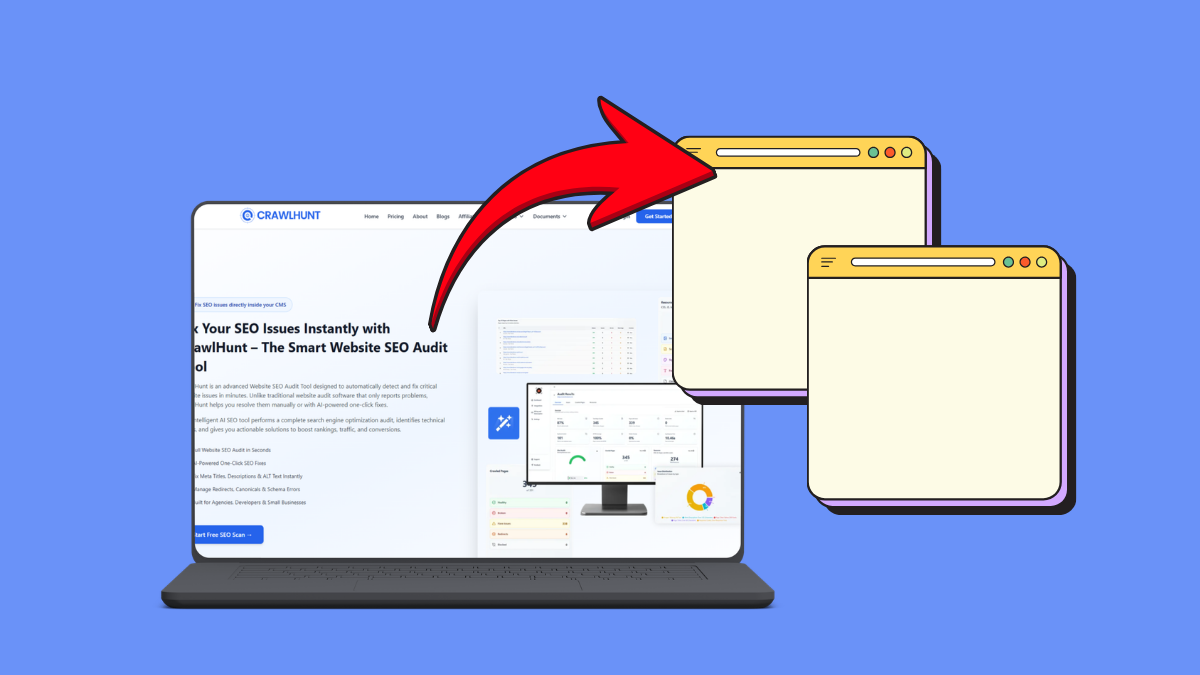
CrawlHunt helps website owners analyze and improve their internal linking strategy through detailed website audits. The tool scans your website like a search engine crawler and identifies technical issues that may affect SEO performance. A technical SEO audit helps detect structural issues like broken links, poor internal linking, and indexing problems that affect rankings.
Crawl Section – Optimize Blog Structure
The crawl section helps you identify:
Crawl Feature | SEO Benefit |
Find orphan pages | Improves page discoverability |
Detect broken links | Enhances user experience |
Check crawl depth | Makes important pages easier to access |
Analyze site structure | Improves website hierarchy |
Identify indexing issues | Helps pages appear in search results |
Understand link distribution | Balances internal authority |
This helps optimize your website structure so search engines can crawl and index pages more efficiently.
Linking Section – Analyze Internal Link Strength
The linking section focuses specifically on internal linking performance and optimization.
Linking Feature | Benefit |
Detect low-link pages | Strengthens weak pages |
Find excessive links | Prevents link dilution |
Analyze anchor text | Improves contextual relevance |
Improve link flow | Enhances authority distribution |
Increase linking score | Strengthens SEO structure |
One of the practical Internal linking benefits of using tools like CrawlHunt is the ability to continuously improve your website architecture based on real SEO data.
Pricing: The pricing structure of CrawlHunt is simple and scalable. Start with the Basic plan at $0, upgrade to Growth for $59 per month, or choose the Scale plan at $149 per month if you need advanced SEO capabilities and higher limits.
4. Avoid Too Many Links on One Page
Imagine opening a webpage where every second sentence contains multiple links. Instead of being helpful, it quickly becomes distracting and overwhelming. Too many links on a page can confuse visitors and reduce the value passed through each link. Search engines distribute authority across all links, so excessive linking can weaken the SEO strength of important pages.
One of the practical Internal linking benefits of maintaining balanced link placement is better authority flow across your website. Instead of stuffing links everywhere, focus on strategic placement. Add links only where they naturally help users continue reading or discover related content. A clean linking structure improves readability, keeps visitors focused, and creates a smoother browsing experience.
A smart approach many SEO experts use is the “value-first linking method.” Before adding any link, ask yourself one simple question: “Will this link genuinely help the reader?” If the answer is yes, include it. If not, leave it out. This keeps your content user-focused rather than overly optimized for search engines.
5. Build Topic Clusters
Topic clusters work like a content ecosystem where multiple related pages support one another through internal links. Instead of publishing isolated blog posts, websites can organize content around one main topic and connect supporting articles back to a central pillar page. For example, a pillar page about SEO can connect to related articles about keyword research, technical SEO, link building, SEO audits, and content optimization.
One of the strongest Internal linking benefits of topic clusters is improved topical authority. Search engines can clearly understand that your website covers a subject in depth, which improves semantic relevance and ranking potential. Topic clusters also create a much better experience for users because readers can easily move between related articles without searching manually. A strong internal linking strategy helps distribute authority across your website and improves how search engines understand your content structure.
A unique strategy many successful websites follow is the “content journey approach.” Instead of randomly linking pages, they guide users step-by-step through beginner, intermediate, and advanced content. For example, a beginner SEO guide may link to keyword research tutorials, which then link to advanced technical SEO strategies. This creates a natural learning path for users while strengthening your internal linking structure and engagement metrics.
6. Use External Links to Trusted Sources
External links play an important role in improving the credibility, quality, and trustworthiness of your content. When you link to reliable and authoritative websites, you provide additional value to readers while also helping search engines understand the context of your content. Trusted external links act as supporting references that strengthen your claims, statistics, research, and information. For example, linking to official Google documentation, research studies, or expert SEO blogs shows that your content is backed by credible sources instead of unsupported opinions.
One of the indirect Internal linking benefits of using quality external links is stronger topical relevance and improved E-E-A-T signals. E-E-A-T stands for Experience, Expertise, Authoritativeness, and Trustworthiness, which are important quality factors used by search engines. When your content references trusted websites, search engines see your pages as more informative and reliable. This can positively influence rankings, especially for competitive SEO topics.
External links also improve user experience because readers can access additional information, detailed research, and expert insights through trusted references. Instead of keeping users limited to one source, you help them explore valuable resources that support their learning journey. This creates transparency and increases trust in your content.
However, not all external links are beneficial. Linking to spammy, low-quality, or irrelevant websites can negatively affect your SEO performance and reduce user trust. That is why it is important to choose external sources carefully and ensure every link adds value to the content.
Trusted External Sources
Source Type | Example | Why It Matters |
Official Documentation | Google Search Central | Provides accurate SEO guidelines and updates |
Research Studies | Industry SEO Reports | Supports claims with real data and analysis |
Statistics Websites | Trusted Data Sources | Adds credibility through verified statistics |
Expert Blogs | Reputable SEO Websites | Offers practical insights and industry expertise |
Government Websites | Official Government Portals | Provides reliable and authentic information |
Educational Websites | University Research Pages | Adds trustworthy educational references |
A balanced external linking strategy improves content quality, builds reader trust, and strengthens your overall SEO performance. When combined with a strong internal linking structure, it creates a more organized, authoritative, and user-friendly website.
7. Monitor Website Performance
Monitoring your website helps measure the effectiveness of your linking strategy. SEO metrics such as bounce rate, session duration, crawl reports, and indexed pages provide insights into how users and search engines interact with your website.
One of the ongoing Internal linking benefits of performance monitoring is the ability to continuously improve weak pages, update outdated links, and strengthen website structure over time.
Final Thoughts
Internal and external linking are essential parts of every successful SEO strategy. A strong linking structure helps search engines crawl your website, understand content relationships, and improve keyword rankings. One of the biggest Internal linking benefits is better website navigation, faster indexing, and improved topical authority. At the same time, quality external links increase trust, credibility, and E-E-A-T signals.
Whether you run a blog, business website, or eCommerce store, smart linking can improve user experience and organic traffic growth. Regular SEO audits, optimized anchor text, and proper link distribution help maintain a healthy website structure. Tools like CrawlHunt make it easier to identify broken links, orphan pages, and weak internal link flow. By following these best practices, you can build a stronger SEO foundation and improve long-term search engine performance. Proper internal linking and structured navigation can help fix duplicate content issues by guiding search engines to the most relevant version of a page.
Frequently Asked Questions (FAQs)
How many internal links should a page have?
There is no fixed number of internal links a page should contain. The ideal number depends on the content length and topic. However, links should always feel natural and useful for users. Adding too many unnecessary links can reduce readability and weaken SEO value.
Can too many internal links hurt SEO?
Yes, excessive internal linking can negatively affect user experience and reduce link value distribution. Overloading a page with links may confuse visitors and weaken the authority passed through each link. It is better to focus on quality and relevance rather than quantity.
What are orphan pages?
Orphan pages are pages that have no internal links pointing to them. Because they are disconnected from the website structure, search engines may struggle to discover and index them. Regular SEO audits help identify and fix orphan pages.
How do external links improve website trust?
External links improve trust by connecting your content to authoritative and reliable sources such as official websites, research studies, and expert blogs. This supports E-E-A-T signals and increases the credibility of your content for both users and search engines.
Which tools can help analyze internal links?
SEO audit tools like CrawlHunt can help analyze internal links, detect broken pages, identify crawl issues, and optimize link distribution. These tools improve website structure and help maintain a healthy SEO foundation.
Do internal links help keyword rankings?
Yes, internal links help improve keyword rankings by creating strong topical relevance and helping search engines understand page context. Using descriptive anchor text and linking related pages strategically can improve visibility in search engine results.