Once there was a small website owner who worked hard to bring traffic but could not understand why his pages were not ranking on Google. He tried many SEO tools, but most of them only showed problems without helping him fix them. Then he discovered two powerful platforms: CrawlHunt and Semrush. Both tools promised better SEO, more traffic, and improved rankings, but they worked in very different ways.
One focused on deep technical SEO audit with AI-powered fixes, while the other focused on keyword research, competitor analysis, and marketing insights. As he explored both tools, he realized that choosing the right one could completely change his website’s growth journey. This is where the comparison of CrawlHunt vs Semrush becomes important for anyone who wants real SEO success in a simple and effective way.
What is Crawlhunt?
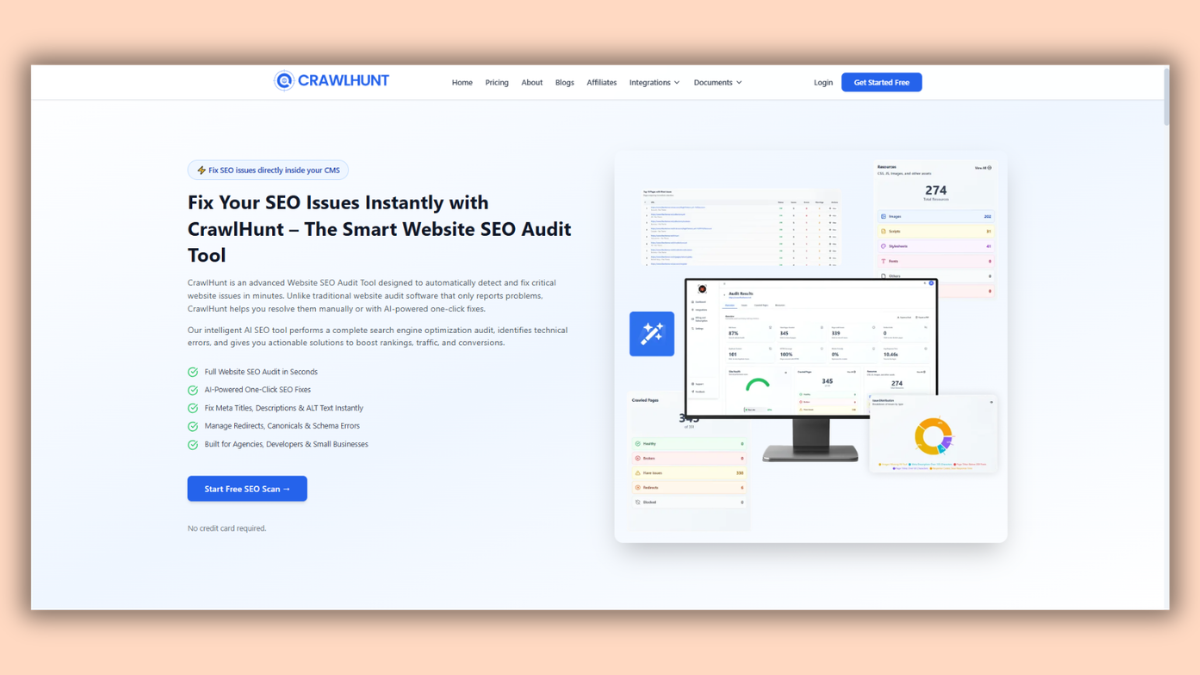
CrawlHunt is an AI-powered technical SEO platform that helps website owners find and fix SEO problems easily. It works by crawling your entire website and checking pages, products, blogs, images, and links for issues. It can detect problems like broken links, missing meta titles, missing descriptions, duplicate content, redirect errors, and missing image ALT text. What makes CrawlHunt special is that it not only finds issues but also helps you fix them using AI tools. You can generate meta titles, meta descriptions, and ALT text automatically and apply fixes in bulk. It also supports website integration, so you can directly improve your site from the platform. CrawlHunt is mainly used to improve website rankings, speed, and overall SEO health in a simple and fast way without technical difficulty.
What is Semrush?
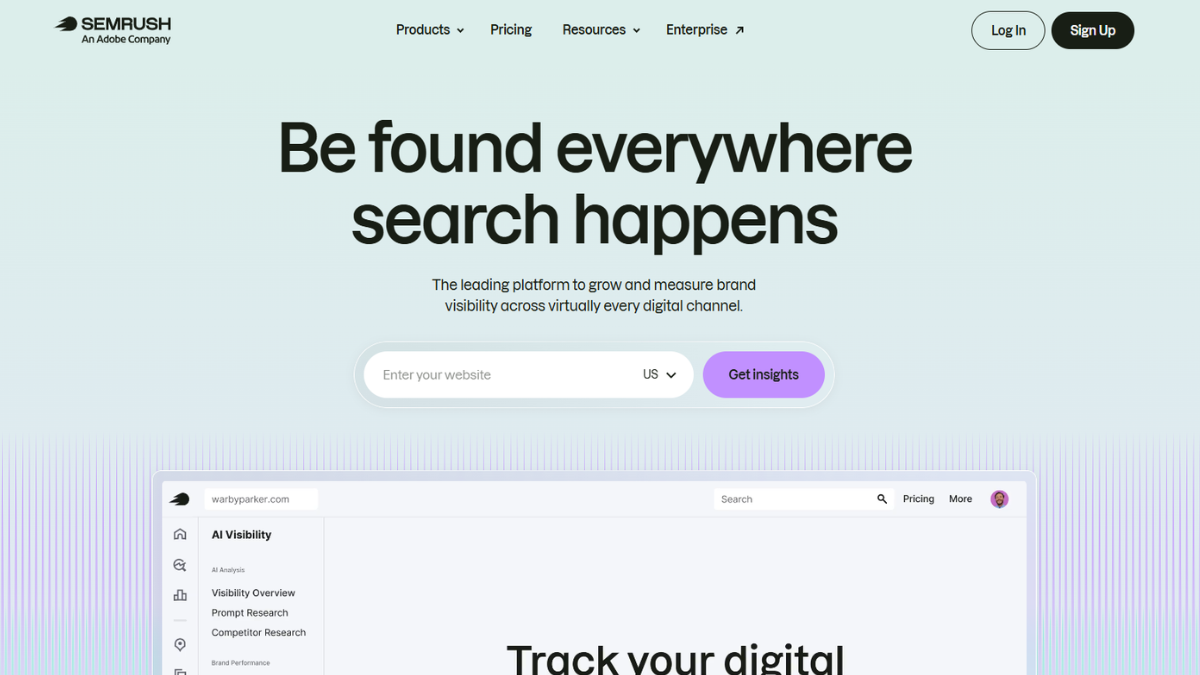
Semrush is a popular online SEO and digital marketing tool used to improve website visibility on search engines like Google. It helps users find keywords, analyze competitors, track website rankings, and improve content for better search performance. With Semrush, you can do keyword research, check backlinks, run site audits, and study how competitors are getting traffic. It also gives suggestions to improve on-page SEO, such as better titles, descriptions, and content structure. Many marketers, bloggers, and agencies use Semrush to plan SEO strategies and grow organic traffic. It is a powerful all-in-one marketing platform, but it focuses more on analysis, research, and reporting rather than directly fixing SEO issues. Semrush helps users understand what to improve, so they can manually optimize their websites for better rankings and long-term SEO success.
Key Features of CrawlHunt vs Semrush
How to Perform SEO Audit: Explore the powerful features of CrawlHunt and Semrush to understand how each platform helps identify SEO issues, improve website health, optimize technical performance, and boost search engine rankings.
Website Crawling and Technical SEO Audit
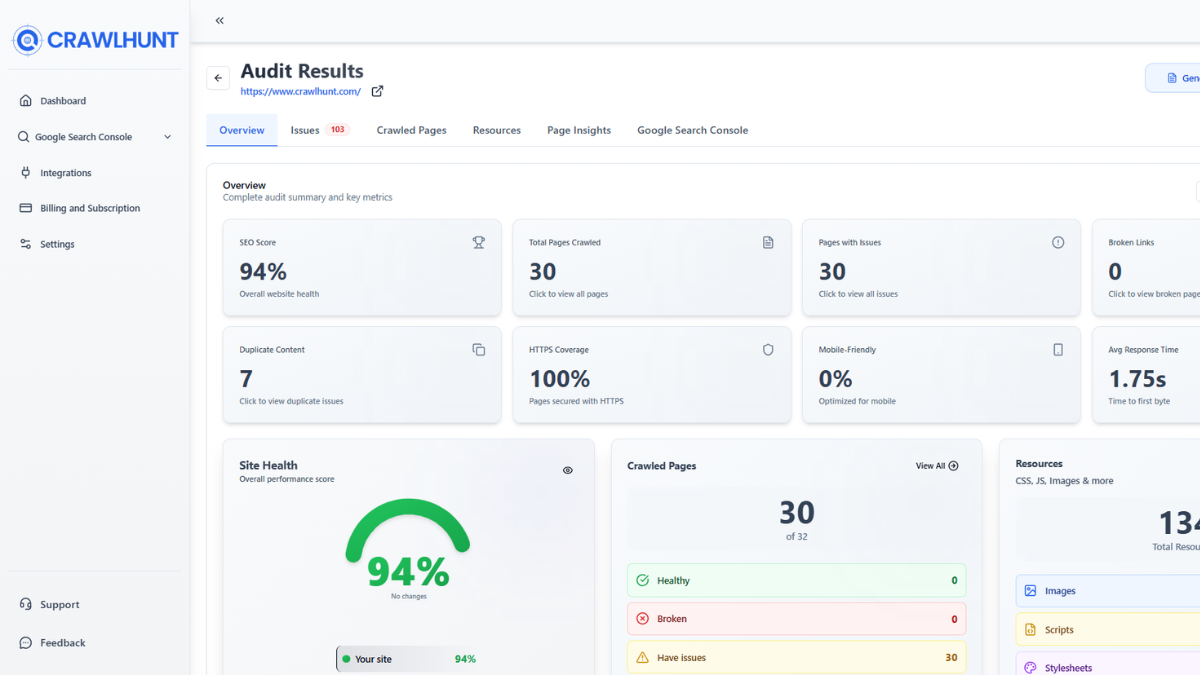
In the comparison of CrawlHunt vs Semrush, CrawlHunt provides a more execution-focused and automation-driven website crawling system, while Semrush primarily focuses on analysis and reporting. CrawlHunt is designed to deeply crawl all types of website structures including products, collections, blogs, and standard pages, making it especially powerful for eCommerce and content-heavy websites. During crawling, it actively detects critical SEO issues such as broken links, duplicate content, missing meta tags, redirect chains, canonical errors, pagination problems, thin content, and indexing issues.
What makes CrawlHunt stronger is not just detection but the way it organizes issues into actionable categories and connects them directly to fix workflows. Users can re-run crawls after changes and immediately validate improvements in SEO health scores. Semrush also provides a strong site audit system with SEO health scoring and issue categorization, but it remains more diagnostic in nature. Users still need to manually implement fixes inside their CMS or rely on developers. In CrawlHunt vs Semrush, CrawlHunt stands out because it reduces dependency on manual technical work and turns auditing into a continuous fix-and-improve cycle rather than just reporting.
AI-Powered SEO Fix System

One of the most powerful advantages of CrawlHunt over Semrush is its advanced AI-powered ecosystem within modern SEO Analysis Tools, designed for automation and direct optimization. Unlike traditional platforms that only highlight issues, CrawlHunt goes a step further by actively resolving them. It leverages AI-driven features such as meta title generation, meta description creation, ALT text generation, redirect suggestions, and actionable content optimization recommendations to streamline and improve overall SEO performance.
This means if a website has hundreds or thousands of pages with missing metadata or image ALT attributes, CrawlHunt can fix them in bulk with a single workflow. Users can also choose between AI suggestions and manual editing, giving flexibility while still maintaining speed. This makes CrawlHunt especially valuable for Shopify stores, agencies, and SEO teams handling large-scale websites.
Semrush, on the other hand, provides AI-assisted content optimization and SEO writing suggestions, but it is more focused on improving content quality rather than directly fixing technical SEO issues across a website. Most fixes suggested by Semrush still require manual implementation. In CrawlHunt vs Semrush, CrawlHunt clearly leads in automation because it reduces the gap between identifying an SEO issue and actually resolving it, making SEO workflows significantly faster and more efficient.
Bulk SEO Optimization Features
When analyzing CrawlHunt vs Semrush, CrawlHunt offers a significantly stronger bulk optimization system that is designed for real-world website scaling. Modern websites often contain hundreds or thousands of pages, especially eCommerce stores, and optimizing each page individually is inefficient. CrawlHunt solves this by allowing bulk updates for meta titles, meta descriptions, ALT text, redirects, and other on-page SEO elements.
Users can apply AI-generated optimizations across multiple URLs simultaneously, ensuring consistency and saving enormous amounts of manual effort. This is particularly useful when launching new product collections, migrating websites, or performing large-scale SEO cleanups. CrawlHunt essentially transforms bulk SEO work into a one-click or few-click process.
Semrush provides insights and recommendations but does not offer the same level of direct bulk editing and implementation. Users still need to go into their CMS or third-party tools to apply changes manually. In CrawlHunt vs Semrush, CrawlHunt clearly wins in bulk SEO execution because it bridges the gap between SEO analysis and real-time implementation, making it more practical for scaling websites.
Redirect Management System
Redirect management is one of the most critical technical SEO tasks, especially for websites that frequently update URLs or migrate content. In CrawlHunt vs Semrush, CrawlHunt offers a more complete and user-friendly redirect management system that includes manual redirect creation, AI-based redirect suggestions, bulk redirect updates, and validation mechanisms to prevent SEO issues.
CrawlHunt also actively prevents harmful redirect patterns such as redirect loops and redirect chains, which can negatively affect crawlability and SEO performance. The AI system suggests the most SEO-friendly redirect paths, ensuring that link equity is preserved and broken URLs do not impact rankings.
Semrush does identify redirect issues during its site audit, but it does not provide a fully integrated redirect creation and management system within the same workflow. Users typically need external tools or CMS-level configuration to fix redirects. In CrawlHunt vs Semrush, CrawlHunt stands out because it turns redirect management into a guided, AI-assisted process rather than a technical manual task, making it more accessible and efficient for non-technical users.
Image SEO Optimization
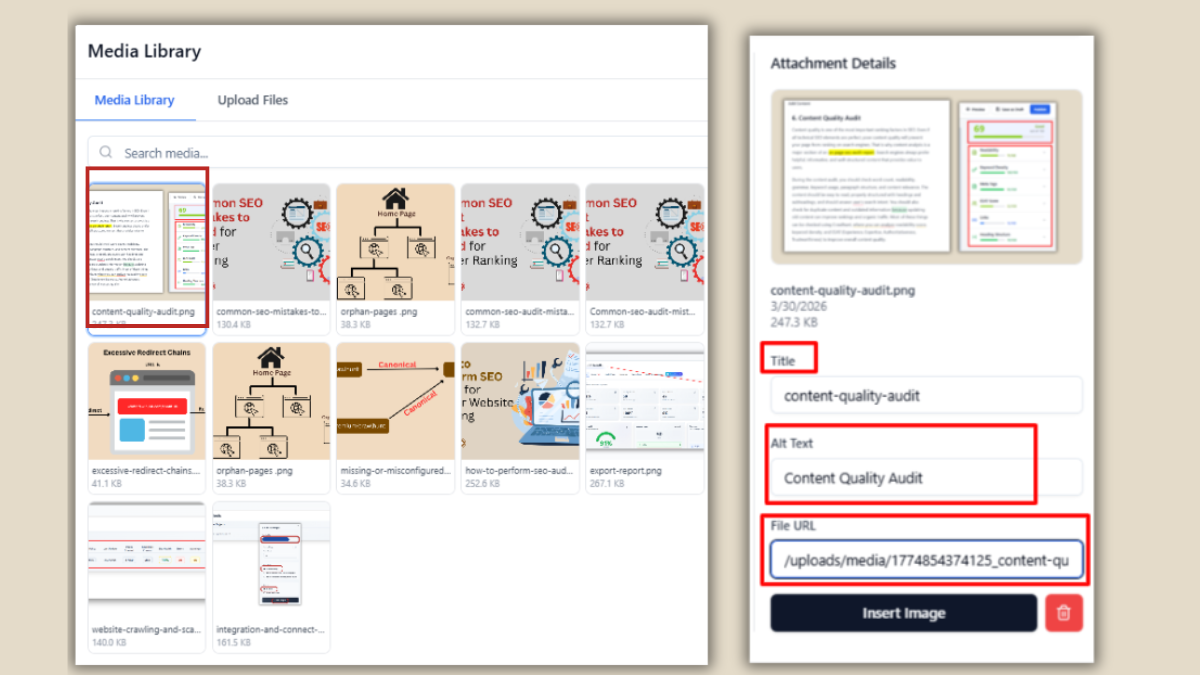
Image SEO is often ignored but plays a major role in improving search visibility, accessibility, and page relevance. In CrawlHunt vs Semrush, CrawlHunt provides a more advanced and practical image SEO system. It automatically detects missing ALT text across the entire website and uses AI to generate optimized ALT attributes that are contextually relevant to each image.
What makes CrawlHunt more powerful is its ability to apply these changes in bulk, which is extremely useful for large product catalogs and content-heavy websites. This ensures that every image is properly optimized for both search engines and accessibility compliance.
Semrush identifies missing ALT attributes as part of its audit process, but users still need to manually edit each image within their CMS. It does not provide the same level of automated ALT text generation or bulk implementation. In CrawlHunt vs Semrush, CrawlHunt clearly offers a more efficient and scalable solution for image SEO, especially for businesses managing large volumes of visual content.
Internal Linking Analysis
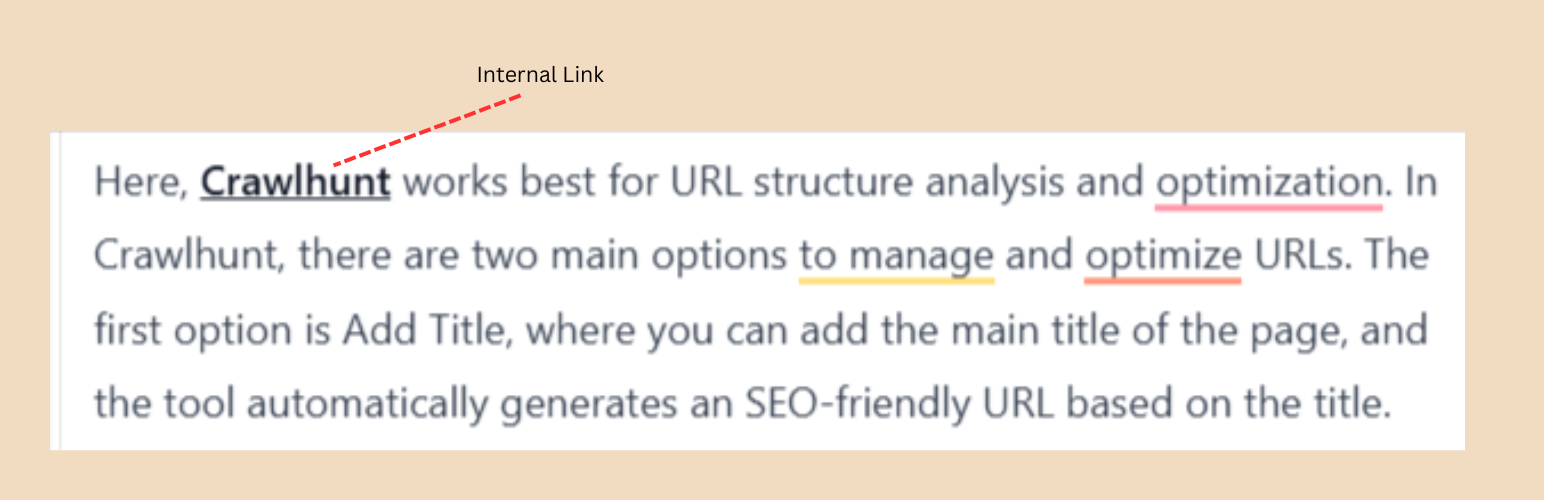
Internal linking plays a crucial role in SEO by helping search engines understand site structure and distribute authority across pages. In the comparison of CrawlHunt vs Semrush, CrawlHunt offers a more action-oriented internal linking system that focuses on improving website architecture rather than just reporting link data.
CrawlHunt identifies broken internal links, orphan pages, weak internal link structures, and pages with insufficient link depth. It also highlights opportunities where internal linking can be improved to boost rankings and improve crawlability. This helps users directly strengthen site structure instead of just analyzing it.
Semrush also provides internal linking insights through its site audit feature, but its approach is more diagnostic. It highlights issues but does not actively guide users through optimization workflows or improvements at the same level. In CrawlHunt vs Semrush, CrawlHunt which is all in one SEO tool provides a more practical and implementation-focused internal linking system that directly supports SEO growth and site structure improvement.
Core Web Vitals and Performance Optimization
Website speed and performance are essential ranking factors, and both tools provide insights into Core Web Vitals. However, in CrawlHunt vs Semrush, CrawlHunt delivers a more focused and actionable performance optimization experience.
CrawlHunt integrates directly with Google PageSpeed Insights and provides detailed analysis of Largest Contentful Paint (LCP), Interaction to Next Paint (INP), and Cumulative Layout Shift (CLS). It also detects performance bottlenecks such as unused JavaScript, unused CSS, render-blocking resources, and unoptimized images.
What makes CrawlHunt stronger is its ability to translate performance issues into actionable fix suggestions within the same workflow. Users are not only informed about slow pages but are also guided toward optimization steps that can be applied directly.
Semrush also includes Core Web Vitals reporting and performance audits, but it mainly focuses on highlighting issues and providing general recommendations. Implementation still requires manual effort. In CrawlHunt vs Semrush, CrawlHunt is more practical for users who want to improve performance quickly without switching between multiple tools.
Dashboard and Reporting System
A strong SEO dashboard is essential for tracking progress and managing multiple optimization tasks. In CrawlHunt vs Semrush, CrawlHunt provides a cleaner and more focused dashboard designed specifically for technical SEO workflows.
CrawlHunt’s dashboard includes SEO health scores, crawl summaries, issue breakdowns, page-level reports, and real-time crawl tracking. It also allows users to export reports in PDF and CSV formats, making it easy to share insights with clients or internal teams. The reporting system is designed around actionable SEO improvements rather than general marketing analytics.
Semrush offers a broader and more complex reporting ecosystem that includes keyword tracking, competitor analysis, traffic analytics, backlink profiles, and advertising insights. While powerful, it can feel overwhelming for users who only want technical SEO insights. In CrawlHunt vs Semrush, CrawlHunt provides a more streamlined and focused reporting experience that is easier to understand and act upon.
CMS Integration and Direct Website Fixes
One of the biggest differentiators in CrawlHunt vs Semrush is CrawlHunt’s ability to integrate directly with CMS platforms and apply SEO fixes in real time. CrawlHunt currently supports Shopify integration and allows users to directly connect their store, run audits, and apply AI-powered fixes without switching platforms.
This means users can fix metadata, ALT text, redirects, and technical SEO issues directly from CrawlHunt and see changes reflected on their live website. This drastically reduces the time between detection and implementation, which is one of the biggest challenges in traditional SEO workflows.
Semrush offers integrations with platforms like Google Analytics and WordPress, but it does not provide direct CMS-level SEO editing and fix deployment within the same workflow. In CrawlHunt vs Semrush, CrawlHunt clearly provides a more hands-on, execution-driven integration system that simplifies technical SEO management for website owners.
SEO Monitoring and Alerts
Continuous monitoring is essential for maintaining long-term SEO health. In CrawlHunt vs Semrush, CrawlHunt provides a more focused technical SEO monitoring system that alerts users about crawl completion, SEO issues, weekly performance reports, and usage thresholds.
Users can continuously track SEO health scores, monitor improvements after fixes, and re-run crawls to validate results. This creates a closed-loop system where SEO is constantly monitored, improved, and revalidated.
Semrush offers broader monitoring capabilities such as keyword tracking, backlink monitoring, and traffic analytics. While powerful, these features are more oriented toward marketing intelligence rather than technical SEO execution. In CrawlHunt vs Semrush, CrawlHunt is more specialized for ongoing technical SEO maintenance and issue resolution tracking.
Ease of Use and Workflow Simplicity
Ease of use plays a major role in SEO tool adoption. In CrawlHunt vs Semrush, CrawlHunt is designed with simplicity and execution in mind. The workflow is straightforward: connect your website, run a crawl, detect issues, apply AI fixes, and re-run the audit to verify improvements.
This structured approach makes CrawlHunt highly accessible for beginners, Shopify store owners, and small teams who may not have deep SEO expertise. The platform removes complexity by combining multiple SEO workflows into a single interface.
Semrush, while extremely powerful, has a steeper learning curve due to its wide range of tools covering keyword research, competitor analysis, advertising insights, and content marketing. In CrawlHunt vs Semrush, CrawlHunt provides a more focused and beginner-friendly experience centered on technical SEO execution.
Technical SEO Automation Advantage
The biggest difference in CrawlHunt vs Semrush is automation. CrawlHunt which is the Best SEO Audit Tool is built as an AI-powered technical SEO fix platform that does not just identify problems but actively helps resolve them through automation, bulk actions, CMS integration, and AI-generated optimization suggestions.
Semrush excels in SEO research, keyword intelligence, and competitor tracking, but it relies heavily on manual implementation for technical SEO fixes. CrawlHunt reduces this gap by turning SEO into a more automated, execution-first process where users can move from audit to fix to validation within the same system.
This makes CrawlHunt especially powerful for businesses that want faster SEO improvements, reduced manual workload, and a simplified optimization workflow.
Pricing Comparison
When comparing CrawlHunt and Semrush pricing, CrawlHunt stands out as a cost-effective choice for businesses seeking AI-powered technical SEO and website optimization without paying premium subscription fees. The Basic plan is free forever ($0), allowing users to start auditing websites with one project, full website crawling, AI fixes, manual fixes, Core Web Vitals analysis, and automated monitoring. Businesses that need more scalability can upgrade to the Growth plan for $59/month, which supports multiple website projects, expanded AI and manual fixes, white-label reporting, daily monitoring, and team collaboration. For agencies and large enterprises, the Scale plan is available at $149/month, offering unlimited website projects, unlimited issue visibility, unlimited AI and manual fixes, real-time monitoring, white-label reports, unlimited team members, and priority support. With affordable pricing and features designed to simplify technical SEO, CrawlHunt is a practical solution for small businesses, growing brands, agencies, and enterprise teams alike.
Semrush, on the other hand, is significantly more expensive because it focuses on enterprise SEO research, keyword tracking, AI visibility monitoring, competitor analysis, content marketing, local SEO, and social media management. Its Starter plan begins around $165 per month when billed annually, while higher plans like Pro+ and Advanced can cost hundreds of dollars monthly. Additional AI Visibility, Local SEO, Content Marketing, and Social Media plans increase the total cost even further. Although Semrush provides advanced keyword research, backlink analysis, traffic analytics, and enterprise-level marketing insights, many small businesses may find the pricing difficult to justify for technical SEO alone. In the comparison of CrawlHunt vs Semrush, CrawlHunt stands out as the more cost-effective platform because it combines technical SEO audits, AI-powered fixes, bulk optimization, and direct website integration at a much lower price while still delivering powerful SEO improvement features.
Which Tool is Better for Shopify SEO?
Choosing the right SEO tool is very important for Shopify store growth, better rankings, and more organic traffic.
CrawlHunt for Shopify SEO:
- CrawlHunt provides direct Shopify integration, making it easy to connect and manage your store SEO in one place.
- It helps optimize product pages, collection pages, blogs, and other store content with automated technical SEO fixes.
- Bulk meta title and meta description optimization saves time for large product catalogs.
- AI-powered ALT text generation improves image SEO and accessibility across all product images.
- Redirect management helps fix broken URLs and maintain SEO value during product or page changes.
- Technical SEO issue detection fixes problems like missing tags, duplicate content, and indexing issues directly from the platform.
Semrush for Shopify SEO:
- Semrush is strong for keyword research, competitor analysis, and SEO strategy planning for Shopify stores.
- It helps identify profitable keywords and track search rankings to improve organic visibility.
- It provides insights into backlinks and content performance for better marketing decisions.
- However, most SEO fixes still need to be done manually inside Shopify or with developer support.
- Overall, CrawlHunt is better for direct Shopify SEO optimization, while Semrush is better for research and strategy, making CrawlHunt vs Semrush an important comparison for eCommerce success.
Conclusion
In conclusion, both CrawlHunt and Semrush are powerful SEO tools, but they serve different purposes. Semrush is best for keyword research, competitor analysis, backlink tracking, and overall digital marketing strategy. It helps users understand SEO data and plan better campaigns. On the other hand, CrawlHunt is a modern AI-powered technical SEO platform that focuses on finding and directly fixing website issues like broken links, missing meta tags, duplicate content, and Core Web Vitals problems.
It also offers bulk SEO fixes, AI-generated content optimization, and direct website integration for faster results. For businesses looking to improve technical SEO, website performance, and search engine rankings quickly, CrawlHunt offers a more practical solution. Using the right SEO tool can improve organic traffic, boost Google rankings, and support long-term SEO growth. Choosing between CrawlHunt vs Semrush depends on whether you need analysis or direct SEO fixes.
Frequently Asked Questions (FAQs)
Does CrawlHunt offer AI-generated ALT text?
Yes, CrawlHunt includes AI-powered image ALT text generation. It automatically detects missing ALT text and creates optimized descriptions for images, helping improve image SEO, accessibility, and search visibility.
Which tool is more affordable: CrawlHunt or Semrush?
CrawlHunt is more affordable compared to Semrush, especially for small businesses and Shopify store owners. CrawlHunt offers free and lower-cost plans with AI-powered SEO fixes, while Semrush pricing is much higher because it focuses on advanced SEO research, competitor analysis, and enterprise-level marketing features.
Can agencies use CrawlHunt for client SEO audits?
Yes, SEO agencies can use CrawlHunt to manage technical SEO audits, generate client-ready reports, monitor SEO health, and apply fixes across multiple websites. Its bulk optimization and reporting features make it useful for agencies handling many client projects.
Is Semrush only for SEO?
No, Semrush is not only an SEO tool. It also provides features for PPC advertising, content marketing, social media management, competitor analysis, traffic analytics, and digital marketing strategy. It is a complete digital marketing platform with strong SEO capabilities.