Technical SEO plays a crucial role in helping search engines properly crawl, understand, index, and rank your website. Issues such as broken links, duplicate meta tags, slow page speed, missing schema, canonical tag issues, crawl errors, and poor Core Web Vitals can quietly affect your organic visibility. This is where the right technical SEO tools can make a major difference.
In this blog, we’ll explore the 7 best technical SEO tools to audit, fix, and improve your website in 2026. These tools can help you identify technical issues, automate repetitive SEO tasks, improve site health, strengthen search engine visibility, and create a better overall experience for both users and search engines.
7 Best Technical SEO Tools in 2026
Choosing the right Technical SEO Tools helps you quickly identify and fix issues such as broken links, crawl errors, missing meta tags, redirects, indexing problems, duplicate pages, slow performance, and canonical issues.
The best Technical SEO Tools go beyond basic website crawling. They help prioritize important problems, monitor site health, analyze technical performance, and automate repetitive SEO tasks. Some tools focus on advanced technical audits, while others combine site auditing with keyword research, competitor analysis, reporting, and SEO monitoring.
Here are the 7 best Technical SEO Tools in 2026 for website owners, ecommerce businesses, marketers, developers, SEO professionals, and agencies.
1. CrawlHunt
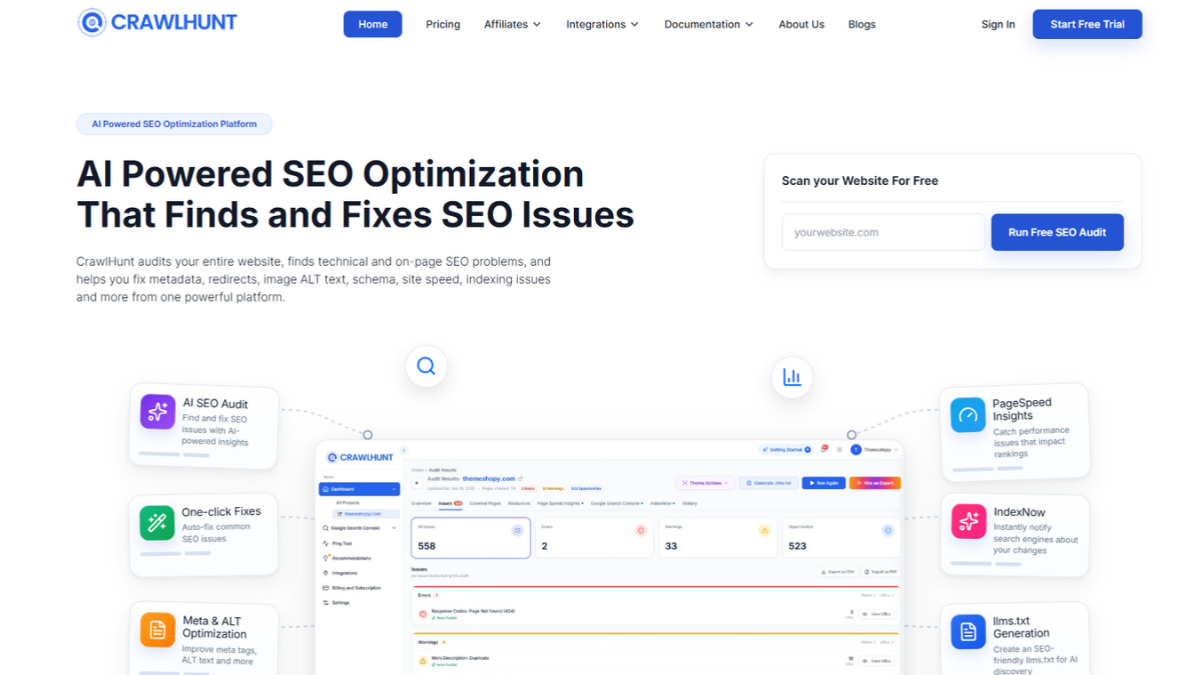
CrawlHunt is a technical SEO and SEO automation platform designed to help website owners identify SEO problems and take action on them without manually reviewing every page. Instead of only showing users a long list of SEO errors, CrawlHunt focuses on creating a more practical workflow where users can crawl their website, find technical and on-page SEO issues, and work through the problems from one application.
This makes CrawlHunt particularly useful for businesses that want Technical SEO Tools that go beyond traditional auditing. A standard crawler might tell you that hundreds of pages have missing meta descriptions or image ALT text. CrawlHunt is designed to help users identify those issues and use AI-powered workflows to generate or manage fixes across multiple pages.
The process begins by crawling the website and analyzing its pages for SEO issues. Once the crawl is completed, users can review different categories of errors and optimization opportunities. For example, if the website contains multiple pages with missing or poorly optimized meta titles, descriptions, or ALT text, users can review those issues and use bulk AI-assisted optimization workflows to generate suitable content.
CrawlHunt can also help with technical problems such as broken URLs and redirects. Website owners frequently remove products, change URLs, reorganize categories, or migrate content, which can create 404 pages. Instead of manually identifying every broken URL and deciding where it should redirect, CrawlHunt provides workflows around 404 monitoring and redirect management, so you can fix 404 errors without checking each page by hand.
For ecommerce and content-heavy websites, this can reduce the amount of repetitive SEO work required.
Some of the key areas CrawlHunt can assist with include:
- Technical SEO website crawling
- SEO issue detection
- Meta title optimization
- Meta description optimization
- Image ALT text optimization
- Bulk AI-powered SEO fixes
- 404 error detection
- Redirect management
- AI-assisted redirect suggestions
- Canonical URL management
- Schema and structured data optimization
- Google Search Console-related workflows
- Indexing and sitemap-related optimization
- IndexNow support
- Internal SEO issue identification
- Core Web Vitals and website performance analysis
CrawlHunt also supports integrations and workflows for platforms such as Shopify, WordPress, and Framer, making it particularly relevant for businesses managing websites on popular CMS and ecommerce platforms.
Among modern Technical SEO Tools, CrawlHunt is therefore positioned around combining SEO auditing with automation. Rather than simply discovering an issue and requiring the user to manually move to another system to correct it, the objective is to shorten the gap between identifying an SEO problem and resolving it.
Best suited for:
Website owners, ecommerce businesses, Shopify stores, WordPress websites, marketers, agencies, and teams looking for technical SEO auditing combined with automation.
2. Screaming Frog SEO Spider
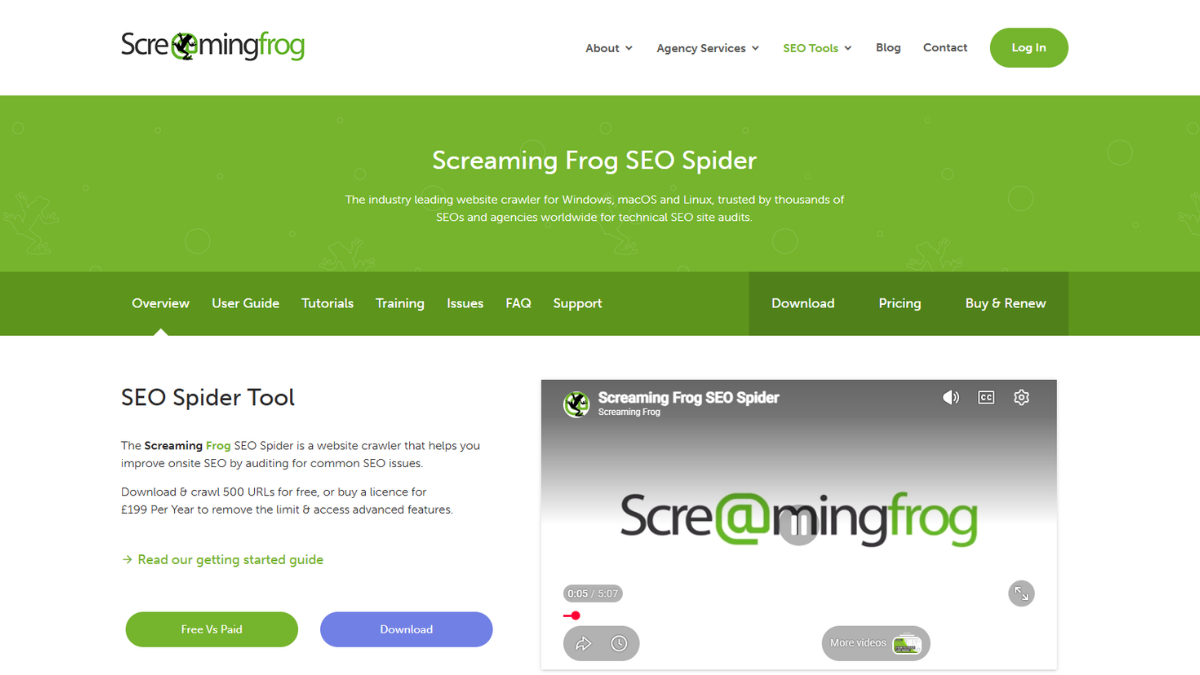
Screaming Frog SEO Spider is one of the most widely used crawling-based Technical SEO Tools for performing detailed website audits. Unlike cloud-based SEO dashboards, Screaming Frog operates primarily as a desktop crawler that allows SEO professionals to crawl websites in a way that is similar to how search engine bots discover pages and links.
Once a crawl is started, Screaming Frog collects a large amount of technical information about the website. SEO professionals can then analyze URLs, response codes, page titles, meta descriptions, headings, canonical tags, internal links, redirects, structured data, indexability directives, images, and many other technical elements.
One of the biggest strengths of Screaming Frog is the level of control it provides. Advanced SEO professionals can configure how the crawler behaves, choose what data should be extracted, crawl JavaScript websites, search source code, extract custom elements, and connect external services such as Google Search Console, Google Analytics, PageSpeed Insights, Ahrefs, and other SEO platforms.
For example, imagine an ecommerce website with 50,000 product and collection URLs. Screaming Frog can help identify products returning 404 errors, redirect chains, duplicate page titles, incorrect canonical tags, orphaned sections of the website, oversized images, pages blocked from indexing, and inconsistent structured data.
This level of visibility makes Screaming Frog particularly valuable when conducting comprehensive technical SEO audits.
Important Screaming Frog capabilities include:
- Broken link identification
- 3XX, 4XX, and 5XX status code analysis
- Redirect chain detection
- Page title auditing
- Meta description auditing
- H1 and H2 analysis
- Canonical tag auditing
- Robots directives analysis
- Duplicate page detection
- Near-duplicate content analysis
- Structured data validation
- Hreflang auditing
- XML sitemap generation
- JavaScript rendering
- Internal linking analysis
- Site architecture visualization
- Custom extraction
- Search Console integration
- Google Analytics integration
- PageSpeed Insights integration
- Core Web Vitals analysis
Screaming Frog also allows scheduled crawling and comparison between crawls, which is useful when monitoring websites after migrations, redesigns, or large SEO projects. Its free version can crawl up to 500 URLs, while the paid licence removes that crawl restriction and unlocks advanced functionality.
Among professional Technical SEO Tools, Screaming Frog is particularly strong when users need access to raw crawl data and detailed technical information rather than a simplified SEO score. In a CrawlHunt vs Screaming Frog comparison, Screaming Frog suits users who want hands-on control, while CrawlHunt suits those who want issue detection and fixes in one workflow.
Best suited for:
Technical SEO specialists, SEO agencies, developers, large websites, ecommerce websites, and advanced users who want detailed control over crawling and data analysis.
3. Semrush Site Audit
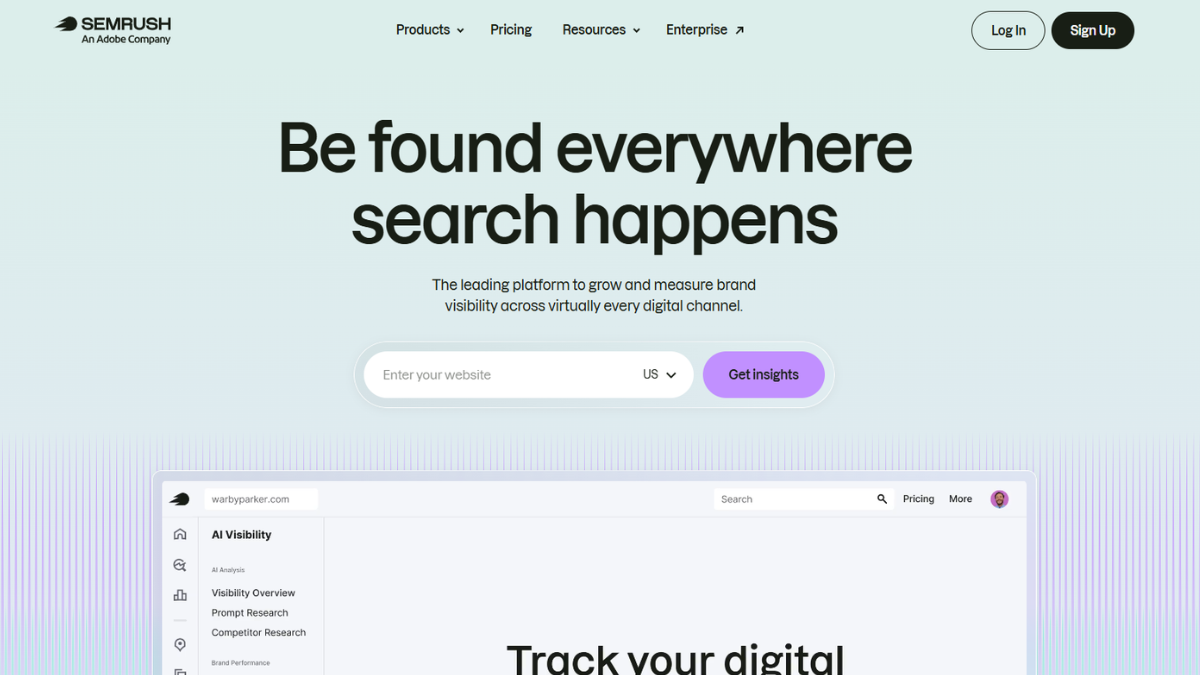
Semrush Site Audit is another powerful option among Technical SEO Tools, particularly for marketers who want technical SEO analysis integrated with a wider digital marketing platform.
The Site Audit tool crawls a website and evaluates technical and on-page SEO issues that could affect search visibility. Instead of simply presenting every discovered problem in one large report, Semrush organizes issues by severity and category, helping users understand which problems should receive attention first.
One useful feature is the Site Health Score, which provides a high-level indication of the technical condition of the website. While SEO professionals should not rely only on a single score, it can be useful for tracking improvements over time and communicating technical SEO progress to clients, managers, or other stakeholders.
Semrush currently checks more than 140 categories of technical issues covering areas such as crawlability, HTTPS implementation, performance, markup, internal linking, Core Web Vitals, and international SEO. It also includes checks related to whether important AI crawlers can access a website.
Semrush Site Audit can help identify problems such as:
- Broken internal links
- Crawlability issues
- Indexability problems
- Redirect errors
- Duplicate content
- Missing metadata
- HTTPS implementation problems
- Internal linking problems
- Slow-loading pages
- Core Web Vitals issues
- Structured data problems
- Sitemap issues
- Mobile-related problems
- International SEO issues
- AI crawler accessibility
Another advantage is that Semrush connects technical SEO with other marketing activities. Users working with Semrush can combine website audit information with keyword research, backlink analysis, competitor research, rank tracking, content optimization, and search visibility data.
This makes Semrush different from some standalone Technical SEO Tools. It is not simply a crawler; it is part of a broader SEO and digital marketing ecosystem. That is why a CrawlHunt vs Semrush decision often comes down to whether you need a full marketing suite or a focused audit-and-fix workflow.
Semrush also allows recurring audits, which means teams can regularly recrawl websites and identify newly introduced technical issues. This is especially useful for ecommerce websites, marketplaces, publishers, and large websites where developers and content teams continuously publish or modify pages.
Best suited for:
SEO teams, digital marketing agencies, marketing departments, ecommerce websites, and businesses looking for technical SEO auditing together with keyword, competitor, content, and backlink tools.
4. Ahrefs Site Audit

Ahrefs Site Audit is another well-established option among professional Technical SEO Tools. It crawls websites and analyzes both technical and on-page SEO factors that could affect website accessibility, crawlability, indexability, and search performance.
After crawling a website, Ahrefs organizes discovered problems into categories and provides recommendations for resolving them. It also provides an overall SEO Health Score that allows users to monitor how the website's technical condition changes over time.
Ahrefs states that Site Audit can check more than 170 SEO issues across major categories including Core Web Vitals, indexability, redirects, links, images, titles, meta descriptions, structured data, robots directives, sitemaps, JavaScript, CSS, duplicate content, and page performance.
Key areas that Ahrefs Site Audit can analyze include:
- Broken pages
- Broken internal links
- Redirect problems
- Redirect loops
- Indexability
- Robots.txt issues
- XML sitemap problems
- Canonicalization
- Duplicate content
- Titles and descriptions
- H1 tags
- Image issues
- JavaScript and CSS
- Structured data
- Internal linking
- Slow pages
- Core Web Vitals
A particularly useful aspect of Ahrefs is the ability to combine Site Audit information with backlink and organic search data from the broader Ahrefs platform. For example, an SEO professional may discover a broken page during a technical audit and then use external link analysis from Ahrefs backlink information to determine whether valuable external links are pointing to that URL.
This combination can help users prioritize technical fixes based not only on whether an error exists but also on the potential SEO value of the affected page.
Ahrefs also supports scheduled technical audits, allowing websites to be monitored continuously rather than relying only on one-time crawls.
Compared with standalone Technical SEO Tools, Ahrefs is particularly useful for organizations already using the platform for backlink research, keyword analysis, competitor monitoring, and organic search research.
Best suited for:
SEO professionals, agencies, content teams, backlink-focused SEO teams, publishers, and businesses already using Ahrefs for broader SEO research.
5. Google Search Console
Google Search Console is one of the most important Technical SEO Tools because the information comes directly from Google. While tools such as Screaming Frog, Semrush, Ahrefs, and CrawlHunt crawl and analyze websites independently, Google Search Console helps website owners understand how Google itself crawls, indexes, and serves their pages in search results.
This distinction is extremely important.
A third-party crawler may determine that a page is technically crawlable, but Search Console can show whether Google has actually indexed that page, discovered an indexing problem, encountered a canonicalization issue, or detected problems affecting search appearance.
For that reason, Google Search Console should usually be used alongside other Technical SEO Tools, rather than being treated as a complete replacement for them. Many audit platforms now offer Google Search Console integration so you can see Google's own indexing data next to crawl results.
The URL Inspection tool is particularly useful. Website owners can enter an individual URL and review information about its Google indexing status, canonical information, crawl details, and page availability. It can also be used to test a live URL and request crawling after important changes have been made.
Google Search Console can help website owners monitor:
- Google indexing status
- Page indexing problems
- Crawling issues
- Sitemap submission
- Individual URL status
- Canonical information
- Search performance
- Mobile-related issues
- Core Web Vitals
- Security issues
- Search enhancements
- Structured-data-related search reports
The Core Web Vitals report is another valuable technical SEO feature. Google uses real-world user experience data to report performance related to Largest Contentful Paint (LCP), Interaction to Next Paint (INP), and Cumulative Layout Shift (CLS).
Because Search Console is based on Google's own crawling, indexing, and search data, it provides visibility that third-party Technical SEO Tools cannot completely replicate.
However, Search Console does not provide the same detailed crawling environment offered by specialized auditing tools. It is therefore often most effective when combined with a crawler or SEO automation platform.
Best suited for:
Virtually every website owner, SEO professional, developer, blogger, ecommerce business, publisher, and agency managing organic visibility on Google.
6. Sitebulb
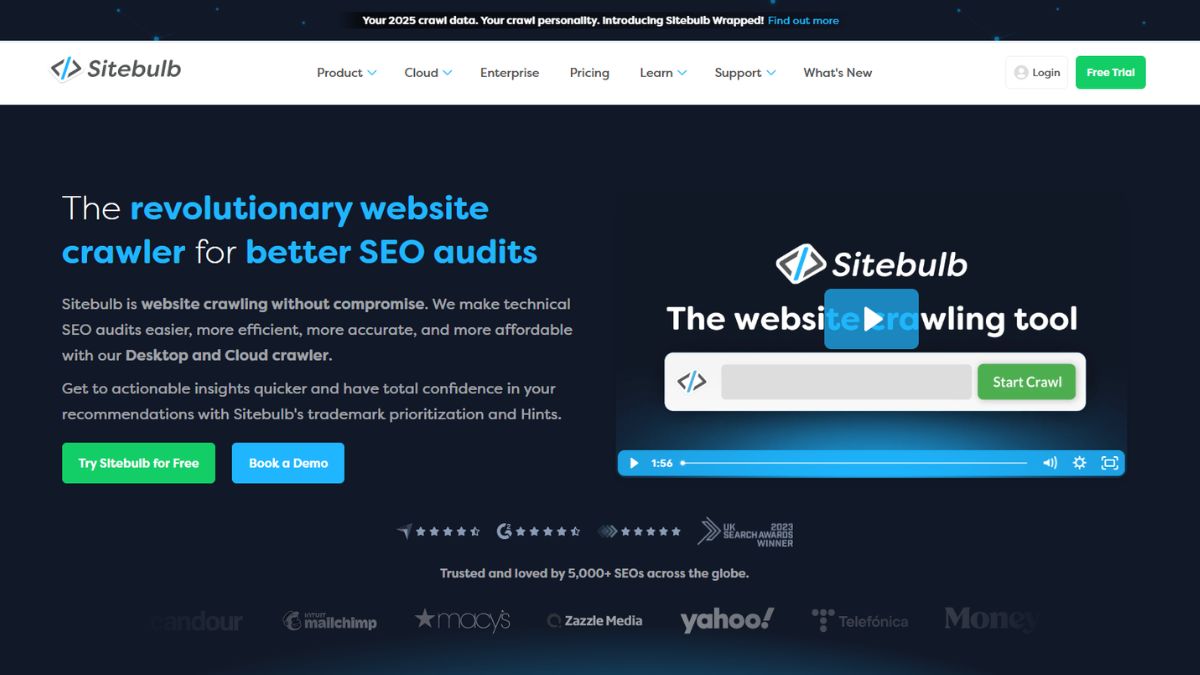
Sitebulb is a dedicated website auditing platform built specifically around technical SEO analysis, issue prioritization, visualization, and reporting. It is one of the more specialized Technical SEO Tools for SEO professionals who want detailed crawl information but also need reports that are easier to interpret and communicate.
One of Sitebulb's distinguishing features is its system of prioritized recommendations known as Hints. Instead of expecting users to manually inspect every piece of crawl data, Sitebulb categorizes discovered problems and provides explanations about what each issue means and why it may matter.
This approach can be useful for agencies because technical SEO audits often need to be presented to clients, developers, content teams, and decision-makers who may not understand raw crawler data. A clear on page SEO audit report with explanations and visuals makes those conversations much easier.
Sitebulb currently analyzes hundreds of SEO issues and provides detailed visualizations, crawl maps, reports, and prioritized recommendations. Its desktop version can crawl large websites, while Sitebulb Cloud provides browser-based auditing designed for larger-scale and collaborative workflows.
Sitebulb can help with:
- Internal linking analysis
- Indexability auditing
- URL crawling
- JavaScript rendering
- Structured data validation
- XML sitemap analysis
- Hreflang auditing
- Accessibility auditing
- Crawl maps
- Website architecture visualization
- Similar-content analysis
- Technical SEO issue prioritization
- Audit comparisons
- Scheduled crawls
- Google Analytics integration
- Google Search Console integration
- Custom reports
One particularly valuable capability is audit comparison. SEO professionals can compare different crawls and determine what changed between audits. This can be useful after website migrations, redesigns, technical fixes, platform changes, or major content updates.
Sitebulb also places significant emphasis on visual reporting. Interactive graphs, crawl maps, charts, and categorized recommendations can make large amounts of technical SEO information easier to understand.
Among advanced Technical SEO Tools, Sitebulb therefore sits between raw data crawlers and simplified cloud-based audit platforms.
Best suited for:
Technical SEO consultants, agencies, enterprise SEO teams, developers, and professionals who need both deep auditing and client-friendly reporting.
7. SE Ranking Website Audit
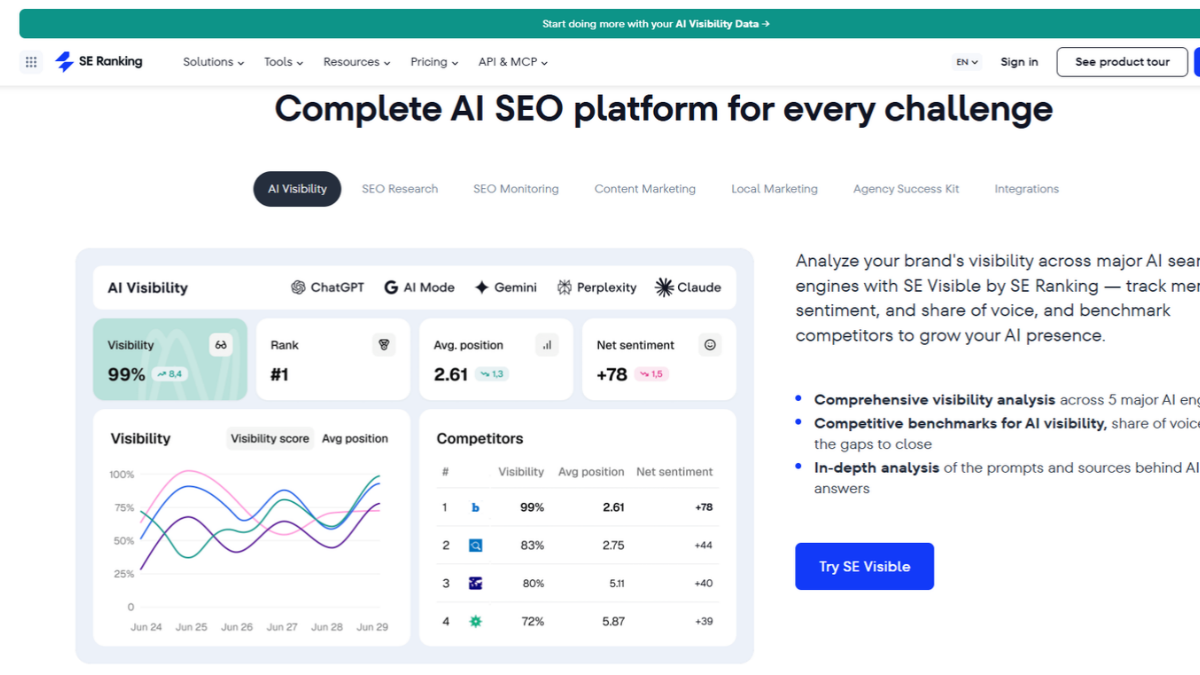
SE Ranking Website Audit is another useful option for businesses looking for Technical SEO Tools within a broader SEO platform.
The platform is designed to crawl website pages and identify technical SEO problems that could affect crawlability, indexing, page performance, usability, and search visibility. Like Semrush and Ahrefs, SE Ranking combines technical auditing with additional SEO capabilities rather than operating only as a standalone crawler.
Website audit reports generally organize discovered problems by severity, allowing users to distinguish between major errors, warnings, and lower-priority observations. This helps businesses avoid treating every SEO issue as equally important.
SE Ranking Website Audit can be useful for checking areas such as:
- Website crawlability
- HTTP status codes
- Broken links
- Redirects
- Meta titles
- Meta descriptions
- Duplicate content
- Canonical tags
- Internal linking
- Images
- Page speed
- Indexability
- Robots directives
- XML sitemaps
- Security-related issues
- Website structure
This makes the platform useful for small and medium-sized businesses that want technical auditing together with other SEO functions such as keyword rank tracking, competitor research, backlink monitoring, and SEO reporting.
One of the advantages of using platform-based Technical SEO Tools such as SE Ranking is that technical website health can be viewed alongside other SEO performance metrics. For small teams, it can work as an all in one SEO tool rather than a set of separate subscriptions. For example, an SEO team may discover that an important landing page has technical problems and then examine whether that page has also experienced ranking changes.
That wider context can make technical SEO reports easier to turn into actionable optimization plans.
Best suited for:
Small and medium-sized businesses, agencies, freelancers, marketing teams, and website owners looking for a broader SEO platform with built-in website auditing.
Conclusion
The right Technical SEO Tools can make website optimization faster, more accurate, and easier to manage. From learning how to fix crawl errors and broken links to improving metadata, redirects, indexing, structured data, and Core Web Vitals, these tools help maintain a healthier website for both users and search engines.
Platforms such as CrawlHunt, Screaming Frog, Semrush, Ahrefs, Google Search Console, Sitebulb, and SE Ranking offer different strengths depending on your website size and SEO requirements. Instead of relying on manual checks, using reliable Technical SEO Tools allows you to detect issues early, prioritize important fixes, automate repetitive tasks, and continuously improve your website’s technical performance and organic search visibility.
FAQs
1. What are Technical SEO Tools?
Technical SEO Tools are software platforms used to analyze and improve the technical health of a website. They can identify issues related to crawling, indexing, redirects, broken links, canonical tags, metadata, structured data, page speed, internal linking, and other technical SEO elements.
2. Which is the best Technical SEO Tool?
The best tool depends on your requirements. CrawlHunt is useful for SEO auditing and automation, Screaming Frog is strong for detailed crawling, Semrush and Ahrefs provide broader SEO capabilities, while Google Search Console provides important crawling and indexing information directly from Google.
3. Can Technical SEO Tools automatically fix SEO issues?
Some Technical SEO Tools mainly identify problems, while others provide automation or assisted fixes. Platforms such as CrawlHunt can help automate tasks including meta title generation, meta descriptions, image ALT text, redirects, and other repetitive SEO optimization activities.
4. How often should I run a technical SEO audit?
For most websites, running a technical SEO audit at least once a month is recommended. Large ecommerce websites or frequently updated websites may benefit from weekly or continuous monitoring to quickly identify broken URLs, indexing problems, metadata issues, or other technical changes.
5. Are free Technical SEO Tools enough for a website?
Free Technical SEO Tools and free website audit tools can be sufficient for basic monitoring and smaller websites. Google Search Console, for example, provides valuable indexing and performance data. However, larger websites usually benefit from dedicated tools that provide deeper crawling, automation, reporting, and more advanced technical SEO analysis.