Shopify makes it easy to launch an online store, but getting consistent organic traffic requires much more than simply adding products and publishing pages. Store owners need to optimize metadata, images, page speed, structured data, redirects, broken links, and other technical SEO elements.
This is where the Best Shopify SEO Apps can make a major difference. These tools help automate repetitive SEO tasks, identify technical issues, improve website performance, and make stores easier for search engines to crawl and understand, which improves crawlability and indexability. In this blog, we will explore seven of the Best Shopify SEO Apps for SEO automation, speed optimization, technical fixes, and overall store visibility.
7 Best Shopify SEO Apps for SEO Automation, Speed & Technical Fixes
Choosing the Best Shopify SEO Apps can help merchants automate SEO tasks, fix technical issues, improve speed, and optimize store performance. While Shopify includes basic SEO features, growing stores often need additional tools for bulk optimization, redirects, image SEO, structured data, and technical audits.
Here are seven Best Shopify SEO Apps worth considering for better automation, technical SEO, and store performance.
1. CrawlHunt – AI-Powered Technical SEO Automation
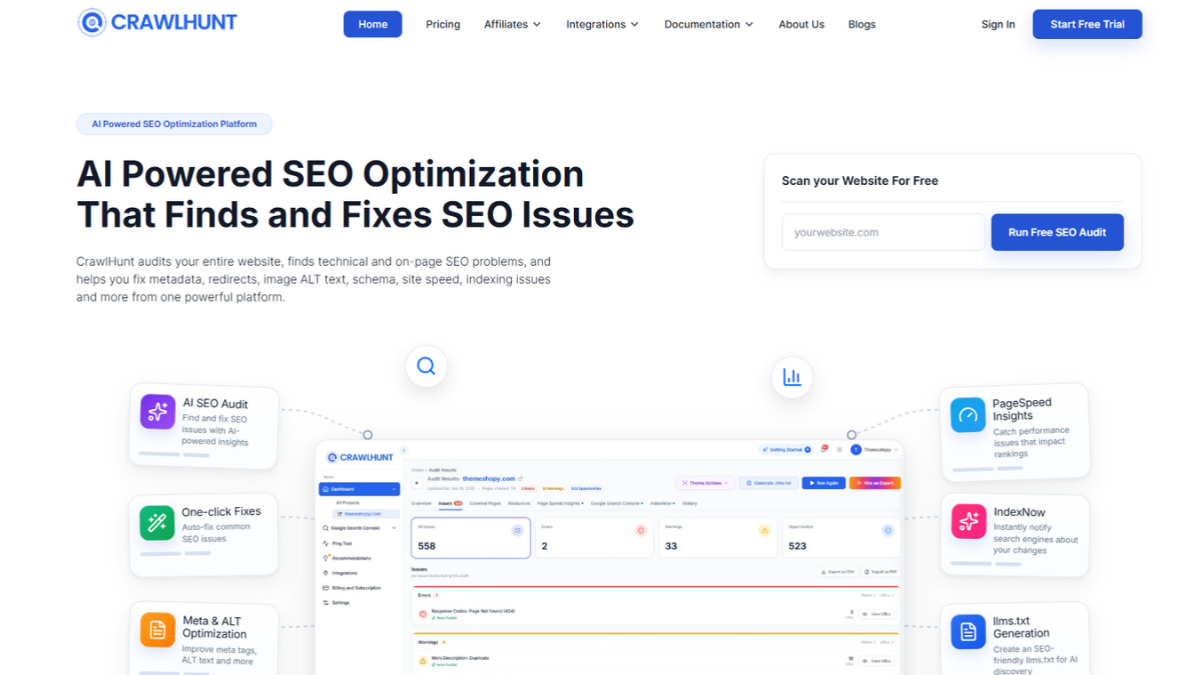
CrawlHunt is an AI-powered SEO platform designed to help Shopify merchants discover and resolve technical SEO issues from one dashboard. Instead of focusing only on individual product metadata, CrawlHunt crawls the website, runs a complete technical SEO audit, and identifies problems that may affect crawling, indexing, search visibility, and website performance.
After installing the CrawlHunt Shopify app and connecting the store with the CrawlHunt platform, merchants can crawl their website and receive a list of detected SEO issues. They can then open specific problems and work on fixes individually, such as learning how to fix 404 errors with suggested redirects, or use automation for supported bulk tasks.
CrawlHunt's Shopify App Store listing highlights functionality around SEO auditing, broken URLs, Core Web Vitals, canonical tags, structured data, Google Search Console integration, and AI-assisted optimization across products, collections, blogs, and custom pages.
Key CrawlHunt features include:
- Complete Shopify SEO website crawling and auditing
- AI-generated meta titles and meta descriptions
- Bulk AI fixes for supported SEO issues
- Image ALT text generation and optimization
- Detection of missing and duplicate metadata
- 404 error identification and management
- AI-powered redirect suggestions
- Internal inlink fixes for broken URLs
- Canonical URL management
- Structured data and schema optimization
- Core Web Vitals analysis
- Website performance and speed optimization tools
- Google Search Console integration
- Indexing and sitemap-related tools
- IndexNow integration
- SEO optimization for products, collections, blogs, and other Shopify pages
One of the major advantages of CrawlHunt is its emphasis on technical SEO automation. For stores containing hundreds or thousands of URLs, manually finding missing metadata, broken links, redirects, canonical problems, and other technical errors can become extremely time-consuming.
Instead, merchants can crawl the store, identify affected URLs, prioritize issues, and use available AI-powered or bulk optimization options to resolve them more efficiently.
Suitable for: Shopify merchants, ecommerce SEO professionals, growing stores, and agencies that want a broader technical SEO auditing and automation platform.
2. TinySEO – SEO, Image and Speed Optimization
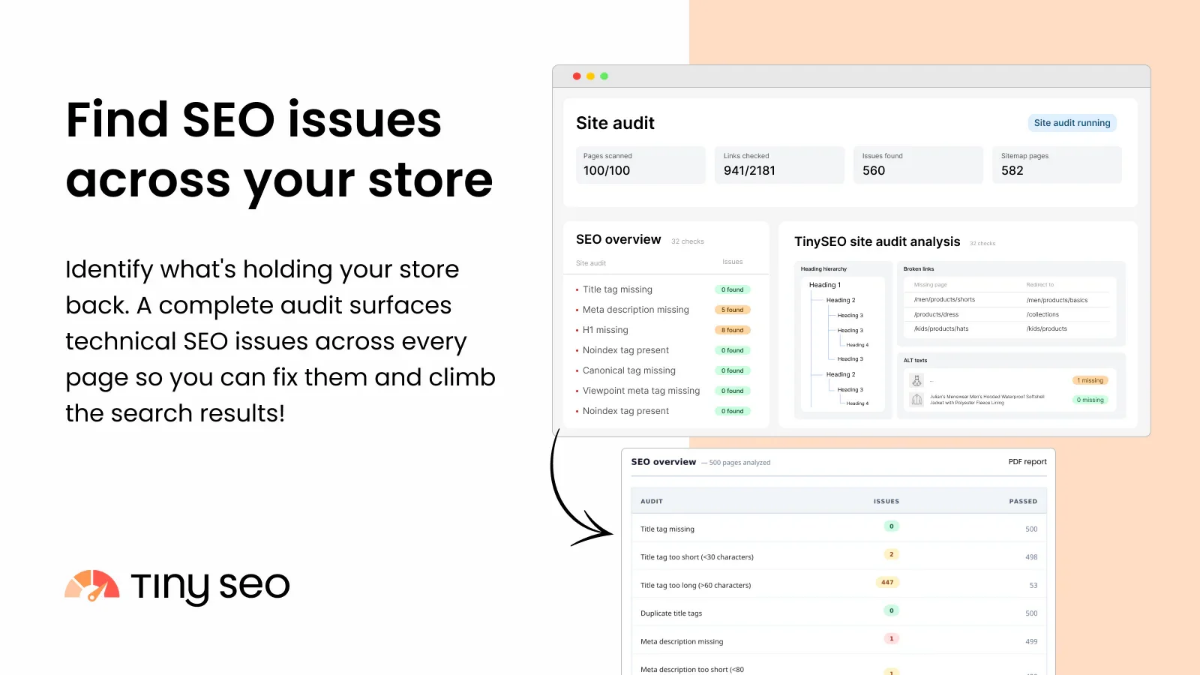
TinySEO, previously known as TinyIMG, combines Shopify SEO optimization with image and performance tools. It is particularly useful for ecommerce stores where large product images contribute significantly to page weight and loading times.
The app focuses on several areas including AI-powered SEO optimization, image compression, JSON-LD structured data, and page-speed improvements. Shopify currently lists TinySEO as a Built for Shopify app.
Images are especially important for Shopify stores because product pages may contain multiple high-resolution photographs. Optimizing these images can help reduce unnecessary file size while maintaining acceptable image quality, and lighter images often support a better largest contentful paint score.
Key TinySEO capabilities include:
- Image compression
- Image optimization
- Page-speed optimization
- AI-assisted SEO optimization
- JSON-LD structured data
- Image SEO
- Product image optimization
- Technical SEO improvements
TinySEO can therefore be useful for merchants whose primary priorities include image SEO and store performance while still wanting access to additional SEO functionality.
It should be remembered, however, that speed optimization is only one component of SEO. Merchants should combine performance improvements with high-quality content, good internal linking, proper metadata, structured data, technical SEO, and a strong overall site architecture.
Suitable for: Image-heavy Shopify stores and merchants looking for a combination of image optimization, speed improvements, and general SEO functionality.
3. Smart SEO AI & Image Optimizer
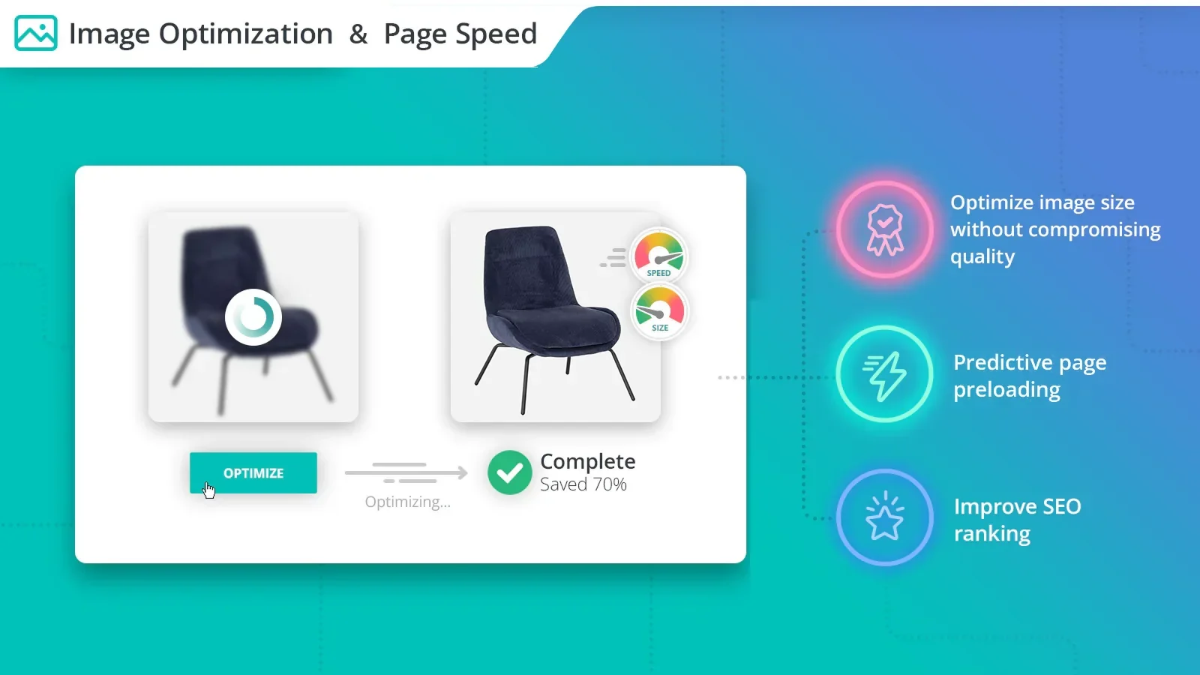
Smart SEO combines traditional Shopify SEO functionality with AI-assisted optimization, image SEO, page performance, structured data, and newer search-discovery features.
According to its current Shopify App Store listing, Smart SEO can generate meta tags, ALT text, and product descriptions using AI. It also provides functionality for image optimization, page speed, structured data, broken links, IndexNow, noindex controls, and sitemap management.
This makes Smart SEO one of the broader options among the Best Shopify SEO Apps for merchants who want to handle several different optimization areas without installing numerous individual applications.
Important Smart SEO features include:
- AI meta tag generation
- AI ALT text generation
- Product description optimization
- Image optimization
- Page-speed optimization
- Structured data
- Broken-link management
- IndexNow automation
- Noindex controls
- Sitemap management
- SEO, AEO, and GEO-related features
Structured data and schema markup for SEO are particularly valuable for ecommerce websites because they provide search engines with additional information about products and pages. Proper implementation can help search engines better understand attributes such as product information, although rich-result appearance is ultimately determined by search engines.
Smart SEO has also expanded into Answer Engine Optimization and Generative Engine Optimization functionality, reflecting the growing importance of visibility beyond traditional Google search results.
Suitable for: Shopify merchants looking for a broad combination of traditional SEO, AI optimization, image SEO, technical features, and emerging AI-search optimization tools.
4. BOOSTER AI SEO + AEO Optimizer
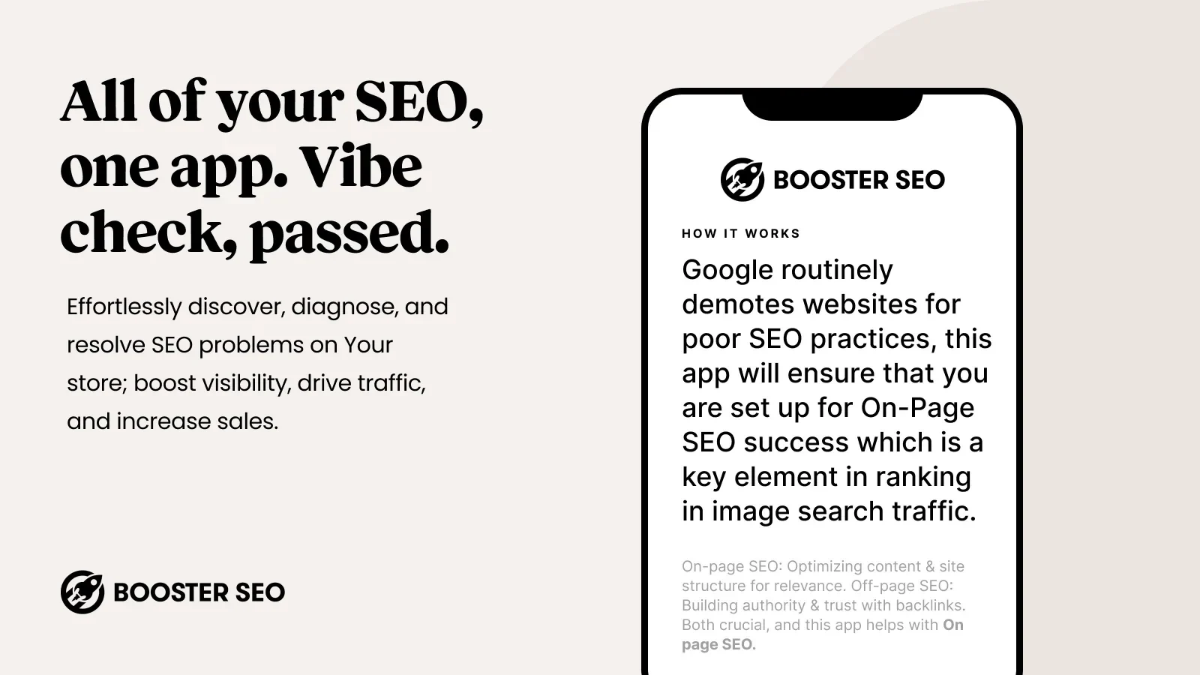
BOOSTER AI SEO + AEO Optimizer is another established option for Shopify merchants who want to automate common SEO and image-related optimization tasks.
The application combines SEO tools with image optimization and store-performance functionality. Shopify currently categorizes it as a Built for Shopify application, while the developer also provides a separate page-speed optimization product.
For ecommerce stores managing many products, automatically handling repetitive SEO tasks can reduce the amount of manual work required from store administrators.
Key areas covered by Booster SEO include:
- AI-assisted SEO optimization
- Image optimization
- Image SEO
- Store performance improvements
- SEO automation
- AEO-related optimization
- Product and collection SEO functionality
- Theme-related optimization capabilities
Image optimization can be especially beneficial for Shopify stores with extensive product catalogs. Large images frequently increase page size, so reducing unnecessary image weight can contribute to a better browsing experience. Pairing compression with an AI image alt text generator also helps describe product photos at scale.
However, merchants should avoid relying entirely on automatic SEO changes. Important product pages and collection pages should still be reviewed manually to ensure that generated metadata accurately represents products and aligns with the store's target keywords and search intent.
Suitable for: Merchants looking for straightforward SEO automation, image optimization, and performance-related improvements.
5. Avada AI SEO Image Optimizer
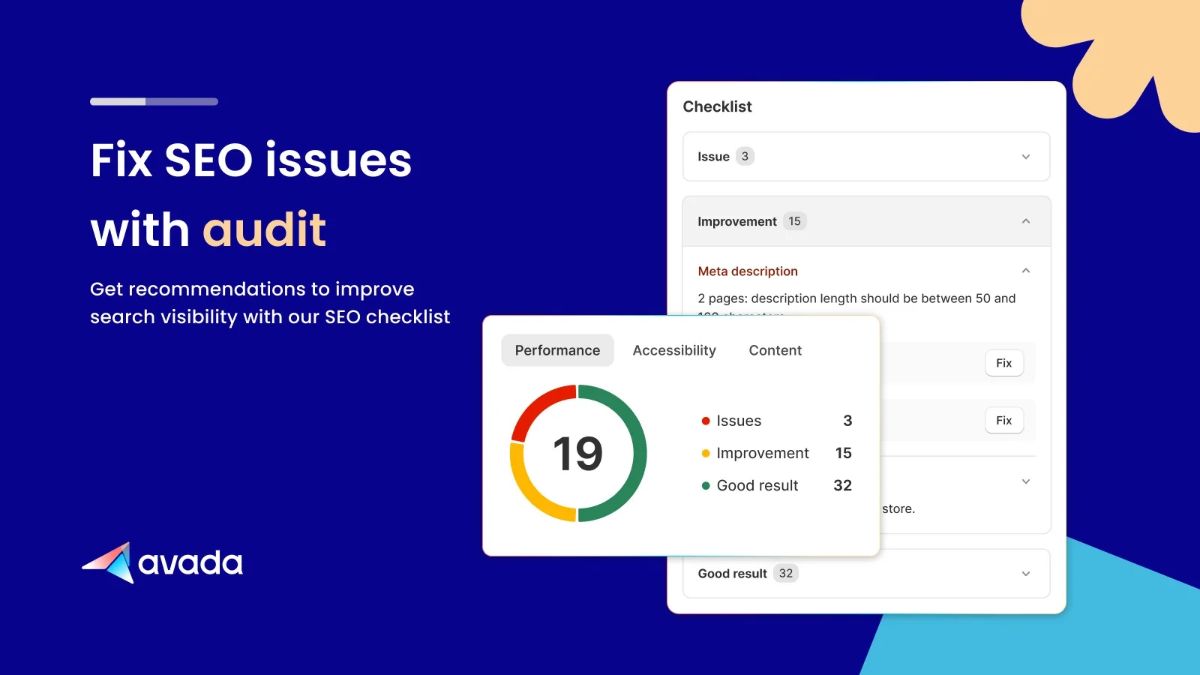
Avada AI SEO Image Optimizer provides a combination of technical SEO, on-page optimization, page-speed tools, image SEO, auditing, and automation.
Its Shopify App Store listing describes an AI SEO Audit Agent capable of scanning pages for problems ranging from metadata issues to slow images. It also includes speed optimization through functions such as lazy loading and minification, alongside technical SEO features including structured data, sitemaps and redirects.
Avada therefore covers several areas that merchants typically look for when comparing the Best Shopify SEO Apps.
Major Avada SEO features include:
- AI-powered SEO auditing
- SEO checklist
- Image compression
- Image resizing
- ALT text optimization
- Lazy loading
- Page-speed optimization
- Core Web Vitals-related optimization
- Meta title optimization
- Blog SEO
- Keyword optimization
- Broken-link detection
- 404 management
- Sitemap functionality
- Structured data
- Redirect management
Its SEO audit functionality can help merchants discover problems that might otherwise remain unnoticed, especially on stores where products, collections, and content are frequently added.
The SEO checklist can also be useful for merchants who do not have extensive technical SEO knowledge because it gives them a more structured process for identifying areas requiring attention.
Suitable for: Merchants looking for an all-in-one mixture of SEO auditing, image optimization, page-speed improvements, and technical SEO tools.
6. SearchPie – SEO, Schema & Speed
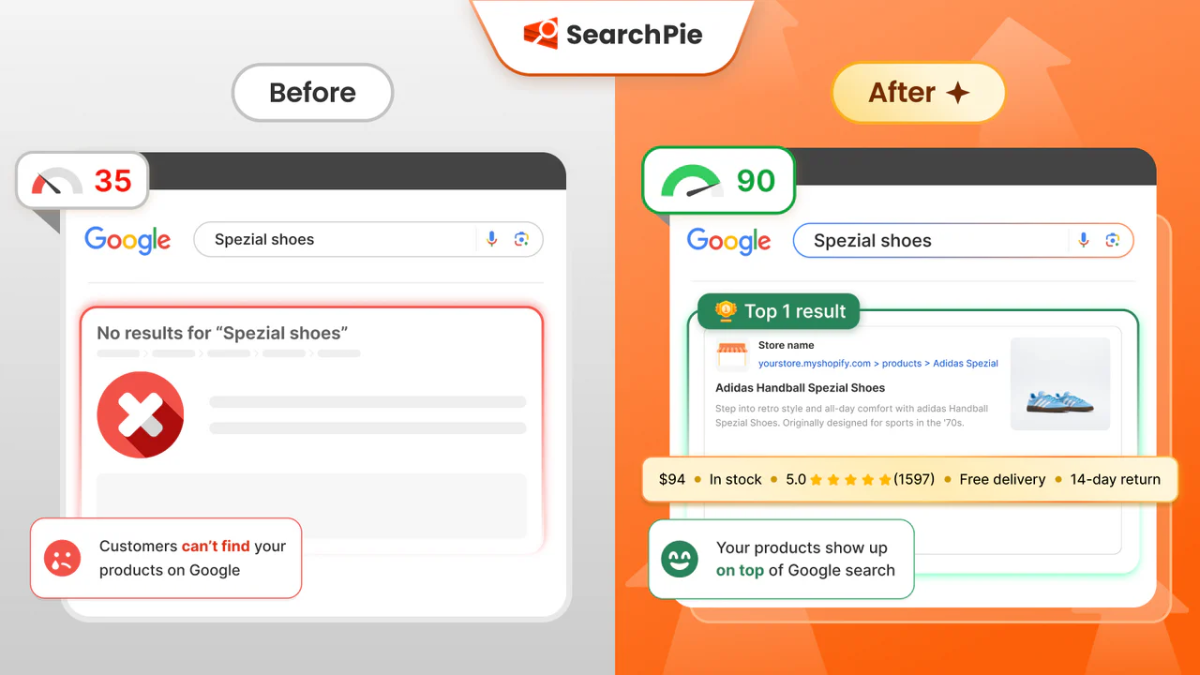
SearchPie focuses on SEO optimization, structured data, speed, and automated fixes. It provides merchants with tools for identifying and resolving SEO problems while also addressing performance and rich-result optimization.
Its Shopify App Store listing positions the application around fixing SEO, speed, and schema markup issues with automation. Shopify also lists it as a Built for Shopify app.
This combination can make SearchPie useful for merchants who want one platform covering both on-page optimization and technical website improvements.
SearchPie can help with areas such as:
- SEO analysis
- Metadata optimization
- Image ALT text
- Image compression
- Structured data
- Schema markup
- Page-speed optimization
- Technical SEO
- SEO reporting
- HTML-related optimization
- Duplicate metadata identification
- Automated SEO improvements
Structured data and schema markup are particularly relevant for ecommerce websites because they can help search engines interpret product-related information more accurately.
SearchPie may therefore appeal to merchants wanting a combination of traditional SEO functionality, technical optimization, and store-performance improvements.
Suitable for: Shopify merchants wanting SEO, schema, page-speed, and automated optimization functionality within a single platform.
7. Plug In SEO
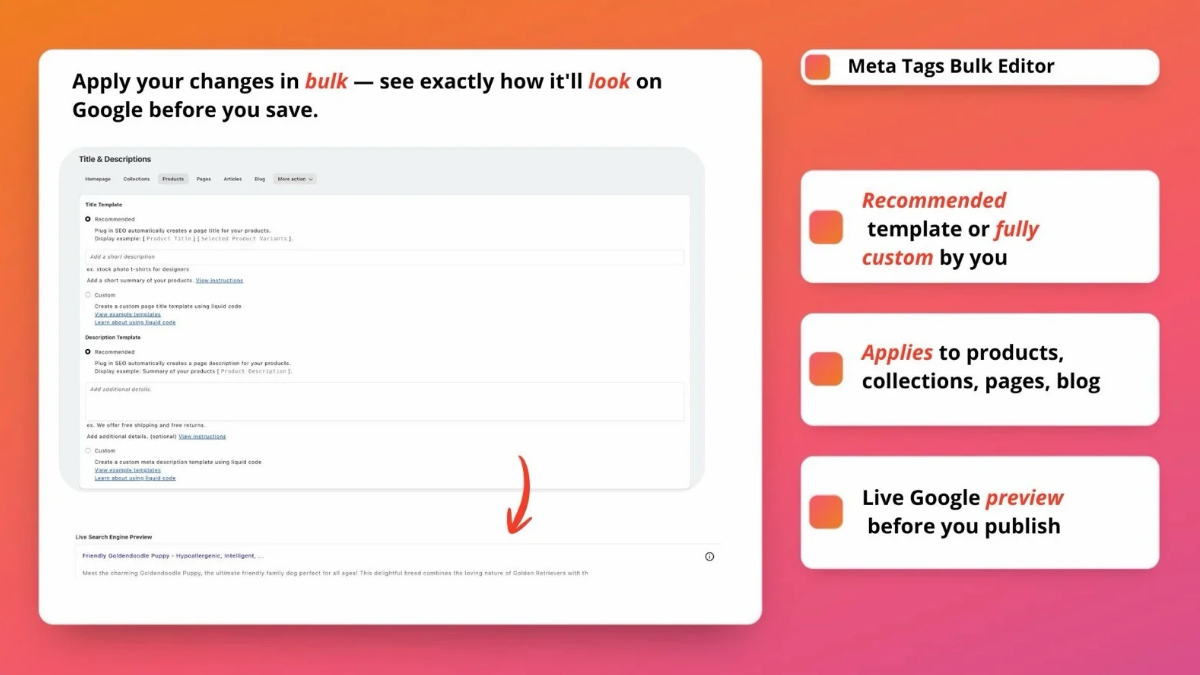
Plug In SEO is a long-running Shopify SEO application designed around finding SEO problems and helping merchants resolve them.
Its current Shopify App Store listing includes an SEO scanner, AI keyword research, AI copywriting, schema markup, broken-link fixes, metadata tools, image optimization, speed optimization, sitemap functionality, indexing features and technical SEO monitoring.
Rather than concentrating exclusively on automation, Plug In SEO also places emphasis on diagnosing SEO issues so merchants can understand where their stores require improvement.
Important Plug In SEO features include:
- SEO scanner
- SEO audits
- AI keyword research
- AI-generated titles and descriptions
- Schema markup
- JSON-LD
- Broken-link detection
- One-click redirect functionality
- ALT text optimization
- Image compression
- Sitemap functionality
- Page indexing tools
- Metadata optimization
- Bulk editing
- URL optimization
- Speed analysis
- Content analysis
- Theme optimization
The SEO scanner can be useful for merchants who want a clearer overview of problems across their Shopify store. Instead of manually reviewing each page, the scanner identifies areas requiring attention so merchants can prioritize their optimization work.
Its sitemap and indexing tools can also help merchants follow XML sitemap best practices, such as keeping sitemaps clean and submitting them for crawling. Its combination of auditing and educational guidance may also appeal to users who want to understand SEO issues instead of simply applying automated fixes.
Suitable for: Merchants who want SEO auditing, keyword research, metadata optimization and technical issue identification combined within a single Shopify application.
Which of the Best Shopify SEO Apps Should You Choose?
There is no single Shopify SEO app that is suitable for every store. The right choice depends on the size of the website, the number of products, existing technical problems, internal SEO knowledge, and how much automation the merchant requires.
For example:
- For technical SEO automation: consider tools with deep crawling, redirects, canonical management, structured data, indexing, and bulk-fix functionality.
- For image-heavy stores: prioritize image compression, ALT-text optimization, and page-performance tools.
- For metadata automation: look for AI or bulk-generation capabilities for titles, descriptions, and ALT text.
- For speed optimization: look for image compression, lazy loading, minification, and Core Web Vitals-related functionality.
- For structured data: choose applications that provide JSON-LD and ecommerce schema capabilities.
- For large Shopify stores: prioritize bulk workflows so thousands of product and collection pages do not need to be edited individually.
When evaluating the Best Shopify SEO Apps, merchants should also consider how much control an application provides over automated changes. SEO automation can save significant time, but important changes should still be reviewed to make sure they accurately represent the page and align with the store's SEO strategy.
Tools such as CrawlHunt are particularly focused on bringing multiple technical SEO workflows together by allowing merchants to crawl their store, discover problems, investigate affected URLs, and use AI-assisted or bulk workflows for supported fixes.
Ultimately, Shopify SEO apps should support a broader SEO strategy rather than replace it. Strong technical SEO works best alongside useful content, optimized product and collection pages, logical website architecture, a well-planned internal linking strategy, relevant backlinks, and a good overall shopping experience.
Conclusion
Choosing from the Best Shopify SEO Apps can help store owners save time, automate repetitive SEO tasks, improve technical performance, and uncover issues that may affect search visibility. The right app should match your store's specific needs, whether that means fixing broken links, improving page speed, optimizing metadata, adding structured data, or managing technical SEO at scale. Tools like CrawlHunt, TinySEO, Smart SEO, Avada, SearchPie, Booster SEO, and Plug In SEO each offer different strengths. For the best results, combine SEO automation with high-quality content, strong internal linking, optimized product pages, and regular performance monitoring to build sustainable organic growth.
FAQs
1. What are the best Shopify SEO apps?
The Best Shopify SEO Apps are tools that help merchants improve technical SEO, metadata, image optimization, redirects, schema, speed, and overall store visibility. Popular options include CrawlHunt, TinySEO, Smart SEO, Avada SEO, SearchPie, Booster SEO, and Plug In SEO.
2. Do Shopify SEO apps really improve rankings?
Shopify SEO apps can help improve the technical and on-page foundations of a store, but they cannot guarantee rankings. Better results usually come from combining technical optimization with valuable content, keyword targeting, internal linking, backlinks, and a strong user experience.
3. Can Shopify SEO apps automatically fix SEO issues?
Yes, many Shopify SEO apps can automate tasks such as generating meta titles, meta descriptions, ALT text, redirects, image optimization, and structured data. More advanced tools can also identify technical problems and support bulk fixes across multiple pages.
4. Which Shopify SEO app is best for technical SEO?
For technical SEO, look for apps that provide site crawling, 404 detection, redirect management, canonical controls, schema, indexing tools, Core Web Vitals monitoring, and bulk optimization. CrawlHunt is designed around many of these technical SEO workflows.
5. Do I still need manual SEO if I use a Shopify SEO app?
Yes. SEO apps can automate repetitive work and identify problems, but manual strategy is still important. Merchants should review AI-generated content, research keywords, create useful content, improve internal linking, monitor rankings, and regularly evaluate overall SEO performance.